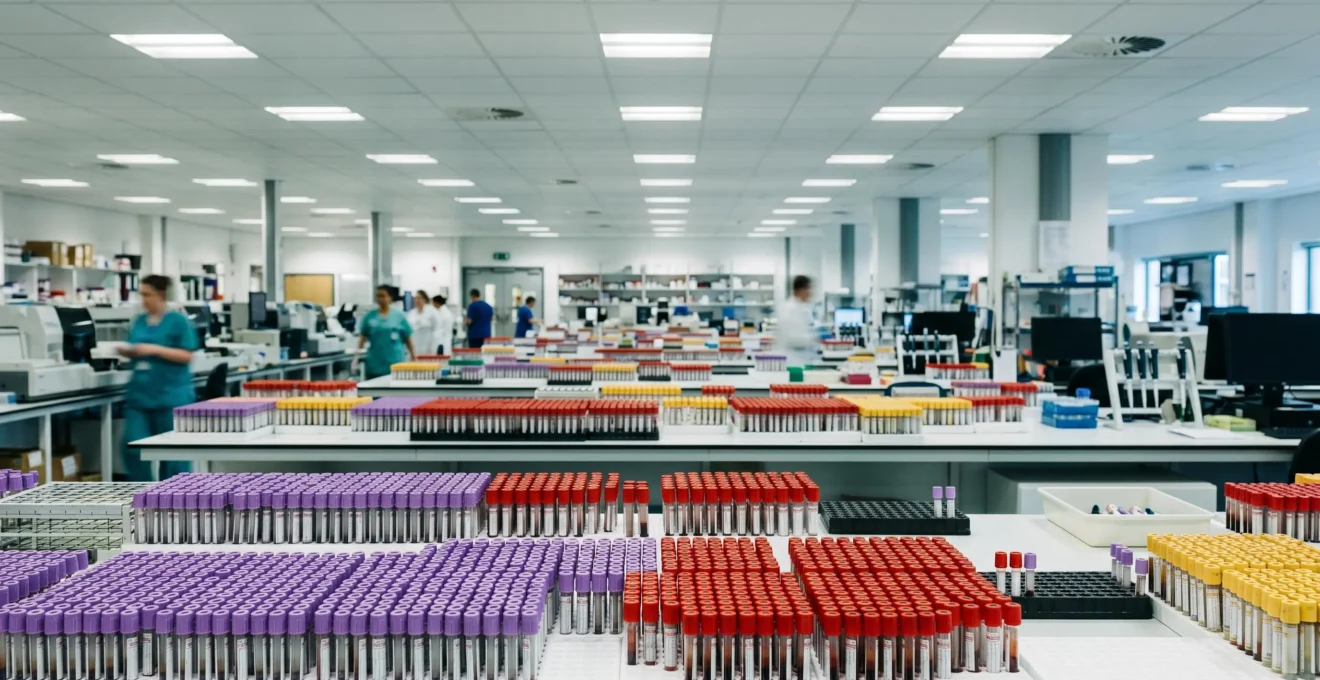
If you’re anxiously waiting for test results, the delay can feel like an eternity. From inside an NHS lab, I can tell you your sample isn’t lost or forgotten. It’s on a complex, physical journey through a system prioritising analytical integrity above all else. This article pulls back the curtain on that journey, explaining why delays happen not because of neglect, but as a necessary part of ensuring the accuracy of the result you and your doctor depend on.
There is a unique and terrible anxiety that comes with waiting for medical test results. Every phone notification makes your heart jump. You refresh your patient portal, hoping for an update that never seems to arrive. The common advice is to « be patient » or « call your GP in a few days, » but this does little to soothe the worry when those days turn into a week or more. You start to wonder: is my sample lost? Has something gone terribly wrong? Has everyone forgotten about me?
As a senior biomedical scientist working within the NHS, I see the other side of that wait every single day. I want to be clear: we know you’re waiting. We understand the anxiety behind every single sample that arrives in our laboratory. The truth is, the delay you’re experiencing is rarely a simple case of being « late. » Your sample—that small tube of blood or tissue specimen—embarks on a complex, physical, and highly controlled journey from the moment it leaves your side. It’s a process involving logistics, physics, chemistry, and specialist human review, all taking place within a system under immense pressure.
The core of the issue is not a lack of care, but a fierce commitment to accuracy. A fast result is useless if it’s wrong; in fact, it’s dangerous. This guide is my attempt to pull back the curtain. We will follow the journey of your sample, decode what « borderline » results really mean, compare the NHS path with private options, and explain why your actions before the test are so critical. Understanding this process won’t make the results appear faster, but it will demystify the wait and, I hope, give you a measure of peace by replacing uncertainty with knowledge.
This article provides a detailed look at the intricate stages your sample goes through. The following summary outlines the key areas we will explore to give you a complete picture of the pathology process.
Summary: The Hidden Journey of Your NHS Test Sample
- What Happens to Your Blood Tube After It Leaves the GP Surgery?
- How to Interpret ‘Borderline’ Blood Results Without Panicking
- NHS Lab vs Private Clinic: Is a 24-Hour Result Worth £150?
- The Fasting Mistake That Ruins Your Cholesterol Test Results
- How to Chase Your Results If the Receptionist Says ‘They Aren’t Back Yet’
- Why AI Detects Breast Cancer Earlier Than Human Radiologists in 90% of Cases
- Why Your Finger-Prick Blood Sample Might Fail Before It Reaches the Lab
- Are Superdrug Home Blood Tests as Accurate as a GP Visit?
What Happens to Your Blood Tube After It Leaves the GP Surgery?
The moment a phlebotomist places your blood tube into a bag, it begins a journey governed by time and temperature. It doesn’t magically appear in a machine. First, it’s collected with dozens, sometimes hundreds, of others from your GP surgery by a dedicated courier. This is the first potential bottleneck; a delayed van due to traffic or weather can impact every sample on board. Once it arrives at the lab, it’s not just one sample; it’s part of a deluge. A central NHS lab is a high-throughput factory of diagnostics. For context, some large hospital pathology departments handle over 6.5 million tests each year. Your sample is logged, given a unique lab number, and sorted based on the test required.
For many tests, the next step is the centrifuge—a machine that spins the blood at thousands of rotations per minute. This physically separates the blood cells from the liquid plasma or serum, which is what we analyse. This step alone takes 10-15 minutes. Only then is it ready for the analyser. This entire « pre-analytical » phase is critical. Analytical integrity is our guiding principle. We cannot test a sample that has been compromised. For instance, NHS pathology guidelines state that some blood samples delayed for more than 12 hours between collection and processing cannot be used, as the chemical components we need to measure will have degraded. In this case, the delay isn’t the analyser; it’s the fundamental biology of the sample itself, and we would have to request a new one.
So, when you’re waiting, remember your sample isn’t sitting in a « to-do » pile; it’s actively moving through a precise, multi-stage industrial process where every step is designed to protect its viability.
How to Interpret ‘Borderline’ Blood Results Without Panicking
Seeing the word « borderline » or a result flagged as just outside the normal range can trigger immediate panic. It’s a loaded term that suggests you’re teetering on the edge of illness. But from a lab perspective, it means something far less alarming. A « normal » or « reference » range isn’t a hard line between healthy and sick. It’s a statistical tool. To create these ranges, labs test a large population of healthy individuals and define the range to include the middle 95% of results. By definition, this means that about 1 in 20 healthy people can have a result that falls outside the standard range without any underlying medical issue.
Think of it less like a cliff edge and more like a spectrum of colour. Your result isn’t « bad »; it’s just in a slightly different shade than the central 95%. This visual representation can help conceptualise the gradient between a « normal » and an « abnormal » reading.
As this image suggests, biological markers exist on a continuum. A borderline result is simply a flag for your GP to consider in the context of you as a whole person. Factors like your age, gender, recent diet, stress levels, or even a mild, unfelt viral infection can temporarily nudge a value outside the standard range. It’s a prompt for a conversation, not a diagnosis. Your doctor will look at the trend of your results over time, consider your other health metrics, and your symptoms (or lack thereof). More often than not, a single borderline result, especially one that is only slightly out of range, will simply lead to a « watch and wait » approach with a follow-up test in a few months.
Therefore, resist the urge to self-diagnose with a web search. Instead, see a borderline result as an invitation for an informed discussion with the healthcare professional who knows you best.
NHS Lab vs Private Clinic: Is a 24-Hour Result Worth £150?
When faced with a long wait, the temptation to pay for a private blood test with a promised 24-hour turnaround is understandable. This choice involves a trade-off between cost, speed, and integration. A private service offers speed and convenience, but it’s crucial to understand what you’re paying for and what you might be losing. The following comparison breaks down the key differences.
| Factor | NHS Blood Tests | Private Blood Tests |
|---|---|---|
| Cost | Free at point of use | £99-£159 for standard panels |
| Waiting Time | 1-3 weeks for results | 24-48 hours for results |
| Access | Requires GP referral | Direct booking available |
| Integration | Fully integrated into NHS patient record | Results provided separately, may need manual GP integration |
| Test Range | Clinically necessary tests | Broader range including preventative screening |
| Accreditation | UKAS ISO15189 accredited | Variable – verify UKAS accreditation |
The primary advantage of the NHS is that it’s a fully integrated system. Your GP orders a test based on clinical need, the result comes back directly into your lifelong patient record, and it’s interpreted by a doctor who knows your history. This contextual analysis is invaluable. Private tests, while fast, deliver their results to you in a vacuum. You receive a PDF, often with little interpretation, which you must then take to your GP for analysis. This can sometimes create more anxiety, especially with borderline results.
Furthermore, the element of « accreditation » is non-negotiable. NHS labs are all accredited to the UKAS ISO15189 standard, a rigorous benchmark for quality and competence. While many private labs are also accredited, some are not. Paying for a test from a non-accredited lab is a complete waste of money. The speed of a private test comes from a streamlined, customer-focused workflow. They are not dealing with the same volume or complexity of A&E, inpatient, and specialist testing that an NHS lab handles simultaneously.
Ultimately, you are paying a premium for speed and direct access, but potentially sacrificing the seamless clinical integration and context that the NHS system, for all its delays, is built to provide.
The Fasting Mistake That Ruins Your Cholesterol Test Results
One of the most common reasons for a delayed or invalid result, which requires a complete re-draw, is patient error. And the most frequent error of all is improper fasting. You might think a small coffee or a piece of toast won’t matter, but for certain tests, it fundamentally alters your blood chemistry, rendering the result clinically useless. A cholesterol and lipid panel is the classic example. Your body is incredibly quick to process fats and sugars. If you eat before the test, the result will show a temporary spike in triglycerides from your meal, not your baseline cholesterol level. This is not a « small » error; it completely invalidates the test.
To ensure we get a clear and accurate picture of your metabolic health, clinical laboratory standards indicate a strict fast of 9-12 hours is required. This means consuming nothing but water. No coffee (even black), no tea, no juice. This isn’t a punitive measure; it’s a scientific necessity to get a stable, baseline reading that reflects your body’s true state. Failing to adhere to this doesn’t just waste your time; it wastes an appointment, a phlebotomist’s time, and the lab resources used to transport and handle a sample that will ultimately be rejected. Following a clear plan is the best way to ensure your effort is not wasted.
Action Plan: Ensuring Your Sample’s Integrity
- Points of contact: Be aware of all pre-test influences. This means fasting for 9-12 hours (water only) and avoiding alcohol or vigorous exercise for 24 hours prior.
- Collecte: Inventory all substances you are taking. Prepare a complete and honest list of all your medications, vitamins, and supplements.
- Cohérence: Confront your list with the clinical context. Inform the phlebotomist about everything on your list, making a special note of Biotin (Vitamin B7), which is a known interferent in many tests.
- Mémorabilité/émotion: Identify the single biggest risk to your test’s accuracy. For many modern tests, the most common and disruptive hidden factor is taking Biotin supplements.
- Plan d’intégration: Schedule your appointment strategically. Booking an early morning slot makes the fasting period easier to manage and ensures your sample is transported to the lab on the same day.
By taking these steps, you actively partner with us in the lab to protect the integrity of your sample and ensure the result we produce is a true reflection of your health.
How to Chase Your Results If the Receptionist Says ‘They Aren’t Back Yet’
Hearing « they aren’t back yet » from the GP receptionist when you’ve been waiting anxiously for days is incredibly frustrating. It can feel like a dismissal, but it’s usually a statement of fact from their perspective. The reception team can only see what’s on their screen, and if the result hasn’t been electronically filed into your record by the GP, it’s effectively invisible to them. This doesn’t mean the lab hasn’t done the test. There are several stages where results can exist before they are « back » in the GP’s system.
First, it’s helpful to know the baseline. While complex tests can take weeks, NHS GP practices report that most routine blood test results are returned to the surgery by the lab within 72 hours. The subsequent delay is often the time it takes for a busy GP to review the result, decide on the next steps (if any), and sign it off to be filed. A result might be sitting in a GP’s digital inbox for a day or two before it’s officially « back. » If you’re calling after a reasonable time (e.g., 5-7 working days), and are met with a wall, being armed with specific questions can lead to a more productive conversation than just asking « are they back yet? ».
Instead of a generic enquiry, try using more targeted « power questions » to help the practice staff help you:
- Can you confirm the exact date my sample was sent to the laboratory?
- Is there an expected turnaround time for this specific type of test noted in my file?
- Is it possible the results are with the surgery but are currently waiting for review by the doctor?
- Did the laboratory flag any issues with my sample, such as haemolysis or insufficient volume, that might be causing a delay?
- If the results are significantly delayed beyond the expected timeframe, what is the practice’s procedure for contacting the laboratory for an update?
These questions show you understand the process and allow the receptionist to look for more specific information, often leading to a more helpful answer than a simple « no. »
Why AI Detects Breast Cancer Earlier Than Human Radiologists in 90% of Cases
You’ve likely seen the headlines about Artificial Intelligence revolutionising healthcare, especially in radiology, with algorithms that can spot signs of cancer on scans. It’s exciting technology. But that’s radiology—the world of images like X-rays and MRI scans. From my perspective in pathology, the world of blood and tissue, the story of automation and AI is more nuanced. We are not just looking at a single image; we are analysing a physical, biological specimen. Our form of « AI » is computational pathology, but the « human in the loop » remains absolutely central to the process.
When a surgeon sends us a biopsy, say from a mole they are concerned about, it goes through a long process of being fixed in formalin, embedded in wax, sliced into sections thinner than a human hair, and stained with specific dyes. Only then is it ready for a pathologist or a senior biomedical scientist to examine under a microscope.
The image above gives a sense of this microscopic world. We are looking for subtle changes in cell shape, size, and arrangement. We use digital pathology systems that can scan the slide and use algorithms to count cells or highlight suspicious areas, but the final diagnosis—the determination of « cancer » or « benign »—almost always requires a highly trained human expert to make the definitive call. The stakes are too high for a fully automated decision. The technology is an incredibly powerful tool that assists and augments our expertise, it doesn’t replace it. It helps us focus our attention, but the final judgement rests on years of training and experience. The delay in a complex pathology result is often the time it takes for multiple experts to review a difficult case.
So while AI in radiology is making incredible strides in image analysis, the tactile, multi-stage world of pathology still relies fundamentally on human expertise to deliver a result you can trust with your life.
Why Your Finger-Prick Blood Sample Might Fail Before It Reaches the Lab
Home testing kits that use a finger-prick sample have become incredibly popular, offering convenience and privacy. However, a significant number of these samples fail before they even reach our analysers. The journey of that tiny vial of blood is fraught with peril, and the « pre-analytical » errors are far more common than with samples drawn by a trained phlebotomist. One of the main culprits is simply time. As The Rotherham NHS Foundation Trust states in its guidelines, the integrity of a sample can be compromised by delays in transit.
Any delays in specimen transportation, for example, delays due to adverse weather conditions, may affect the integrity of the sample which can lead to unreliable test results.
– The Rotherham NHS Foundation Trust, Pathology Service Guidelines
While this applies to all samples, a home kit sent via post is particularly vulnerable. It might sit in a hot mailbag or a cold sorting office, temperatures that can degrade the proteins and enzymes we need to measure. Another common issue is haemolysis. This happens when red blood cells burst, releasing their contents into the serum. It’s often caused by squeezing your finger too hard to get enough blood. This turns the sample pink and can dramatically, and falsely, increase the readings for tests like potassium, interfering with the results. Finally, there’s the problem of insufficient volume or clotting. If you don’t get enough blood into the tube, or if it clots before it’s properly mixed with the anticoagulant, the test simply cannot be run. We need a certain minimum amount of liquid serum or plasma to perform the analysis, and a clotted sample will be rejected on arrival.
These kits offer great potential, but their effectiveness is entirely dependent on a perfect collection and transport process, something that is far from guaranteed outside a clinical setting.
Key takeaways
- Your test sample is on a complex physical journey; a delay is often a sign of quality control, not neglect.
- The lab process is designed to protect analytical integrity, meaning a delayed but accurate result is always prioritised over a fast but potentially wrong one.
- A « borderline » result is a statistical flag for your GP to interpret in your unique context, not a definitive diagnosis of illness.
Are Superdrug Home Blood Tests as Accurate as a GP Visit?
This is a question we’re hearing more and more. The answer is a classic « it depends. » It’s crucial to distinguish between analytical accuracy and clinical utility. In terms of analytical accuracy, the answer is often yes. Most reputable private testing companies, including those used by high-street brands, send their samples to the same large, accredited laboratories that the NHS uses. This means industry accreditation data confirms that the machine analysing your private sample is likely the same model, running the same method, as the one analysing an NHS sample. The chemical reaction in the lab is accurate.
However, the clinical utility—the real-world value and reliability of the result—is where things diverge significantly. The entire process matters, not just the final analysis. As highlighted by NHS Pathology Quality Standards, the biggest issue is the « uncontrolled pre-analytical phase. » This is everything that happens *before* the sample reaches the lab.
The test’s chemical reaction in the lab may be accurate, but its real-world value is compromised by the uncontrolled pre-analytical phase: user’s sample collection skill, postal delays, temperature changes.
– NHS Pathology Quality Standards, Clinical Utility vs Analytical Accuracy Discussion
This single point encapsulates the entire problem. Did you collect the sample correctly, without causing haemolysis? Was the volume sufficient? Was it transported quickly and at the right temperature? Did you fast properly? When a phlebotomist takes your blood at a GP surgery, these variables are controlled. With a home kit, they are not. Therefore, while a normal result from a home test is probably reassuringly correct, an abnormal one comes with a huge question mark. Is the result abnormal because you have a health issue, or is it abnormal because the sample was compromised on its journey? This ambiguity can lead to more anxiety and requires a follow-up NHS test anyway, bringing you back to square one.
Now that you understand the entire journey of a sample, from collection to analysis, you are better equipped to have an informed conversation with your GP, interpret your results with less anxiety, and understand the complex, dedicated work that goes into every single test we perform.