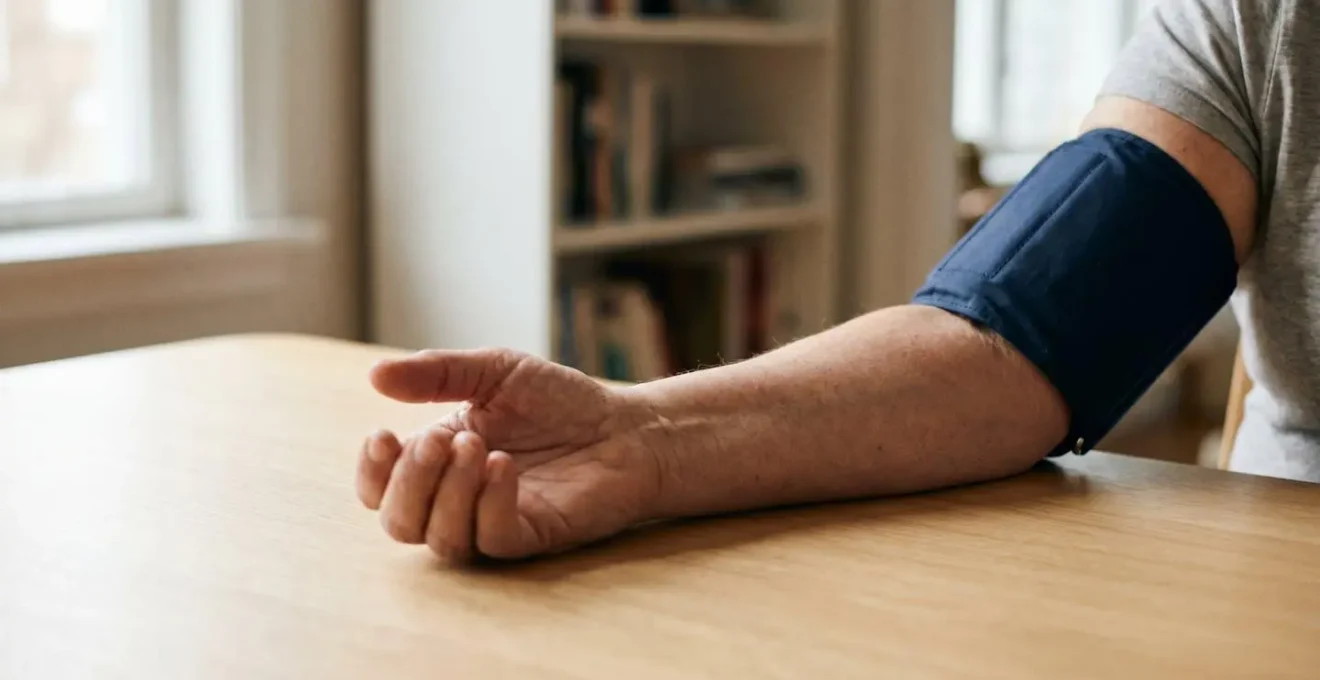
Inaccurate blood pressure readings are rarely a device fault; they are typically user-induced signal errors that can be systematically eliminated.
- Using the wrong cuff size can skew systolic readings by nearly 5 mmHg, corrupting your data before it’s even measured.
- Simple posture mistakes, like an unsupported arm or crossed legs, are a primary cause of artificially high numbers.
Recommendation: Adopt a clinical diagnostic protocol for every measurement: verify cuff fit, correct your posture, and measure at consistent times to ensure data integrity.
Receiving a high blood pressure reading from your home monitor can be alarming. Your immediate thought might be that your health has worsened or the device is faulty. This leads many down a path of anxiety and confusion, often characterized by repeated, frantic measurements that only seem to confirm the worst. Patients frequently report that they « sit quietly » or « use the right arm, » believing they are following the rules, yet still get inconsistent results. These common sense approaches, while well-intentioned, often miss the critical technical details that ensure a clean, accurate measurement.
The reality is that obtaining a reliable blood pressure reading is less like using a simple thermometer and more like running a sensitive diagnostic test. Most « inaccuracies » are not hardware failures but signal interference caused by subtle, correctable errors in procedure. The key isn’t just to measure, but to ensure the integrity of the signal you are measuring. This requires a shift in mindset—from a passive patient to an active technician of your own health monitoring.
This guide abandons the generic advice. Instead, it provides a technician’s diagnostic protocol to help you systematically identify and eliminate the variables that corrupt your readings. We will dissect the entire measurement process, from hardware selection to data interpretation, empowering you to trust the numbers you see. By understanding the ‘why’ behind each step, you can transform your home monitoring from a source of anxiety into a powerful tool for managing your health.
To help you navigate these critical aspects, this article breaks down the most common and significant sources of error in home blood pressure monitoring. We will cover everything from equipment setup to a proper measurement protocol and the correct interpretation of your data.
Table of Contents: A Technician’s Diagnostic Guide to Home Blood Pressure Monitoring
- Why Using the Wrong Cuff Size Can Skew Your BP Reading by 10 Points
- How to Check If Your Glucose Monitor Is Still Accurate After 6 Months
- Wrist vs Upper Arm Monitors: Which One Does the British Heart Foundation Recommend?
- The Posture Mistake That Artificially Raises Your Blood Pressure at Home
- When is the ‘Golden Window’ to Measure Blood Pressure for Diagnosis?
- How to Lower Your ‘Heart Age’ Score by 5 Years in Just 6 Months
- Smartwatch ECG vs Hospital ECG: Can Your Watch Really Detect a Heart Attack?
- Is Your Apple Watch Giving You False Anxiety About Heart Rate Spikes?
Why Using the Wrong Cuff Size Can Skew Your BP Reading by 10 Points
The single most critical hardware component for accurate blood pressure measurement is the cuff. An ill-fitting cuff acts like a distorted lens, corrupting the pressure signal before the device can even process it. Using a cuff that is too small for your arm circumference will constrict the artery unevenly, requiring more pressure to occlude it and thus artificially inflating the reading. Conversely, a cuff that is too large will not apply pressure effectively, leading to a falsely low reading. The magnitude of this error is not trivial; a 2023 clinical trial demonstrated that a regular cuff on large arms falsely raised systolic readings by 4.8 mmHg on average.
This common source of user-induced error is often compounded by market availability. A 2024 Johns Hopkins study found that many popular home monitors do not include cuffs large enough for a significant portion of the adult population, forcing users to either use an incorrect size or make a separate purchase, creating a barrier to accurate monitoring.
To ensure signal integrity from the very start, you must perform a one-time calibration of your cuff to your arm. Follow this simple protocol:
- Measure Your Arm: Use a flexible measuring tape to find the circumference of your bare upper arm midway between your shoulder and elbow.
- Match to Manufacturer Specs: Compare your measurement to the sizing chart for your specific monitor brand. Typical ranges are: Small Adult (22-26 cm), Adult (27-34 cm), and Large Adult (35-44 cm).
- When in Doubt, Size Up: If your measurement falls on the border between two sizes, always choose the larger cuff.
- Verify the Fit: When fastened, the cuff should be snug enough that you can slide only two fingers underneath it. It should not be able to move up or down your arm.
How to Check If Your Glucose Monitor Is Still Accurate After 6 Months
While this guide focuses on blood pressure, many patients also self-monitor blood glucose, where accuracy is equally vital. Over time, all electronic meters can experience calibration drift. For a glucose monitor, this means its ability to accurately translate the chemical reaction on the test strip into a digital number can degrade. It’s a critical maintenance check you should perform at least twice a year or whenever you open a new vial of test strips.
Think of this as a functional self-test for your device. Here is the standard procedure to verify your glucose meter’s accuracy:
- Use Control Solution: This is a special liquid with a known, fixed concentration of glucose. It is sold separately and is the single best way to test the meter and strip combination.
- Perform a Control Test: Apply the control solution to a test strip just as you would a drop of blood. The vial of control solution will have a range of acceptable results printed on it (e.g., 110-140 mg/dL).
- Evaluate the Result: If your meter’s reading falls within the specified range on the vial, your meter and test strips are working correctly together. If it falls outside this range, repeat the test. If it fails again, do not use the meter for clinical decisions. Contact the manufacturer; the strips or the meter may be faulty.
- Check Expiration Dates: Always ensure your test strips are not expired. Expired strips can give wildly inaccurate readings and are a common source of error.
This simple check ensures that the data you are collecting is reliable, a principle that applies to all home health monitoring. It is a foundational part of building a trustworthy health picture for you and your doctor.
Wrist vs Upper Arm Monitors: Which One Does the British Heart Foundation Recommend?
The convenience of wrist-style blood pressure monitors is tempting, but from a technical standpoint, they introduce significant potential for user-induced error. The arteries in the wrist are smaller and not as deep as the brachial artery in the upper arm, making them more sensitive to positioning. While health bodies like the British Heart Foundation provide general guidance on monitoring, the clinical consensus, strongly articulated by other major organizations, points to a clear preference for upper arm devices.
This preference is based on the principle of minimizing variables. As stated by the American Heart Association, a leading authority in cardiovascular health:
The American Heart Association recommends using a home blood pressure monitor that measures blood pressure in your upper arm and not using wrist or finger blood pressure monitors.
– American Heart Association, Clinical Guidelines on Home Blood Pressure Monitoring
The primary reason for this recommendation is the high risk of positional error with wrist monitors. For an accurate reading, the wrist cuff must be held perfectly at heart level. If the arm is too low, gravity will cause the reading to be artificially high; if too high, it will be falsely low. While an upper arm cuff is also subject to this rule, its placement on a table or supported by cushions makes achieving the correct height far easier and more repeatable.
If a wrist monitor is the only option, mastering the correct positioning is non-negotiable. The illustration below demonstrates the required technique.
To execute this, you must place your hand over your heart, as if saying the pledge of allegiance, with the wrist monitor at the same level as the center of your chest. This is the only way to ensure the signal integrity is not immediately compromised by hydrostatic pressure effects.
The Posture Mistake That Artificially Raises Your Blood Pressure at Home
After ensuring your hardware is correctly calibrated, the next critical phase of the diagnostic protocol is standardizing the measurement environment—your body’s posture. Many people believe that simply « sitting quietly » is enough. However, specific postural errors can introduce significant signal interference. For example, crossing your legs can compress blood vessels and increase readings. But the most impactful and common mistake is improper arm support.
Your arm must be completely relaxed and supported at heart level. If your arm is dangling or if you are actively holding it up, your muscles are contracting. This muscular tension can increase the pressure reading. The effect is not minor; research published in 2024 in JAMA Internal Medicine found that incorrect arm positioning leads to significantly inaccurate blood pressure measurements. This is a classic example of user-induced error that can lead to a misdiagnosis of hypertension or unnecessary medication adjustments.
The following image and checklist outline the standardized posture for a clinical-grade home measurement.
To eliminate postural interference, follow this pre-measurement checklist every single time:
- Back Supported: Sit in a straight-backed chair, with your back fully supported.
- Feet Flat: Place both feet flat on the floor. Do not cross your legs or ankles.
- Arm at Heart Level: Rest your cuffed arm on a flat surface, like a table. Use a pillow to elevate your arm to the level of the middle of your chest.
- Arm Relaxed: Ensure your arm is completely limp and relaxed. You should not be holding it in position.
- Resting Period: Remain in this exact position for 3-5 minutes of quiet rest *before* you press the « Start » button. This allows your blood pressure to stabilize to a true resting state.
When is the ‘Golden Window’ to Measure Blood Pressure for Diagnosis?
Consistency in measurement timing is a cornerstone of a valid diagnostic protocol. Your blood pressure is not a static number; it fluctuates throughout the day in a predictable pattern known as a diurnal rhythm. As Dr. Nicholas Ruthmann of the Cleveland Clinic explains, « Blood pressure is at its lowest when we sleep, goes up a bit in the morning when we wake up, and then it often goes down again by mid-morning. » Taking readings randomly throughout the day will produce a noisy, uninterpretable dataset.
To provide your doctor with actionable data, you must measure during specific « golden windows. » The morning window is particularly crucial. Indeed, clinical research indicates that morning readings between 6-10 AM capture the peak cardiovascular risk period when the natural morning surge in blood pressure occurs. This is the time when most heart attacks and strokes are triggered, making these readings highly diagnostic.
To standardize data collection for a diagnostic evaluation (for example, in the week leading up to a doctor’s visit), clinicians recommend a strict 7-day protocol:
- Familiarization Day (Day 1): Practice your technique without recording the results to ensure you are comfortable with the process.
- Morning Measurements (Days 2-8): Take two readings, one minute apart, between 6 AM and 10 AM. This must be done before you eat, exercise, or take medication.
- Evening Measurements (Days 2-8): Take two readings, one minute apart, between 6 PM and 10 PM. This should be done after dinner has settled and before bed.
- Log Everything: Record the date, time, and both systolic and diastolic numbers for every single reading. Your doctor will use this full dataset.
- Exclusion Zone: Critically, avoid measurements within 30 minutes of exercising, smoking, or consuming caffeine, as these activities will temporarily and artificially spike your readings, corrupting the diagnostic value of the data.
Following this protocol provides a clear, stable picture of your « true » blood pressure, free from the noise of daily activities.
How to Lower Your ‘Heart Age’ Score by 5 Years in Just 6 Months
Your « Heart Age » is a concept that translates your cardiovascular risk factors—including blood pressure—into an easily understood metric. A high blood pressure reading contributes to a higher heart age. The good news is that this is not a permanent diagnosis. Diligent self-monitoring is the first step toward lowering it, as clinical studies have shown that self-monitoring blood pressure at home can lead to better blood pressure control, especially in the initial months. Once you have a reliable stream of accurate data, you can implement targeted strategies to improve your numbers.
Lowering your diastolic pressure (the bottom number) is often a key target. This number reflects the pressure in your arteries when your heart is at rest between beats and can be particularly responsive to lifestyle interventions. The following protocol outlines several evidence-based techniques that can have a significant impact.
Your Action Plan: Evidence-Based Strategies to Lower Diastolic Pressure
- Establish Baseline: First, establish accurate baseline measurements using properly fitted equipment and correct technique to track genuine progress, not measurement noise.
- Focus on Stress Reduction: Diastolic pressure is particularly responsive to reduced cortisol levels. Implement a daily practice of meditation or deep breathing exercises.
- Reduce Sodium Intake: Aim for below 2,300 mg of sodium daily (or 1,500 mg if you have hypertension). Diastolic pressure often responds more quickly to sodium reduction than systolic pressure.
- Implement Isometric Handgrip Exercises: As recommended by the Mayo Clinic, use a handgrip device. Squeeze it at 30% of your maximum effort for 2 minutes, rest for 1 minute, and repeat 4 times. Do this 3 days per week.
- Track ‘Time in Range’: Shift your focus from individual readings. Calculate the percentage of your readings that fall within your target range (e.g., under 130/80 mmHg) to measure control over time.
By combining accurate monitoring with these targeted, technical interventions, you can take active control of your cardiovascular health and demonstrably lower your risk profile, effectively turning back the clock on your heart age.
Smartwatch ECG vs Hospital ECG: Can Your Watch Really Detect a Heart Attack?
Modern wearables, like the Apple Watch, have introduced powerful health monitoring tools to the public, most notably the single-lead electrocardiogram (ECG). This has led to a common and dangerous question: can my watch detect a heart attack? The short, technical answer is no. A smartwatch ECG is a rhythm-checker, not a heart attack detector. It is designed to look for irregularities in the heart’s electrical rhythm, such as Atrial Fibrillation (AFib). It cannot detect the physiological signs of a heart attack (myocardial infarction), which involves a blockage in an artery and the subsequent death of heart muscle tissue.
A 12-lead hospital ECG is the diagnostic standard because it views the heart’s electrical activity from 12 different angles. This comprehensive view allows clinicians to see specific patterns (like ST-segment elevation) that indicate muscle damage. A single-lead watch ECG provides only one view, which is insufficient for such a diagnosis.
This crucial distinction is why medical bodies urge caution. As Dr. Michael Rakotz of the American Medical Association states, « The technology is advancing rapidly, but we still don’t have enough evidence to recommend regular use of these direct-to-consumer wearable devices for the diagnosis or clinical management of high blood pressure. »
The following table breaks down the technical differences between these two technologies.
| Feature | Smartwatch ECG (Single-Lead) | Hospital ECG (12-Lead) |
|---|---|---|
| Primary Detection Capability | Electrical rhythm abnormalities (AFib, irregular heartbeat) | Comprehensive cardiac assessment including ischemia and infarction |
| Heart Attack Detection | Cannot detect blockages or muscle death | Can identify ST-segment changes indicating heart attack |
| Number of Heart Views | 1 electrical pathway | 12 different electrical pathways |
| Clinical Use | Screening and symptom correlation | Diagnostic standard for cardiac events |
| Complementarity with BP Monitors | Can capture AFib episodes that cause BP monitor errors | Used in clinical settings alongside manual BP measurement |
| Best Application | Recording rhythm during symptom episodes for doctor review | Emergency assessment and comprehensive cardiac diagnosis |
Key Takeaways
- Most high blood pressure readings at home are not device failures but are caused by correctable errors in user procedure.
- Cuff size and measurement posture are the two most significant sources of « signal interference » that can artificially raise your readings.
- For diagnostic data, a strict protocol of consistent timing (morning and evening), rest, and logging is non-negotiable.
Is Your Apple Watch Giving You False Anxiety About Heart Rate Spikes?
The constant stream of data from a smartwatch can be a double-edged sword. While it provides valuable insights, it can also create a new phenomenon: health metric anxiety. Seeing a heart rate « spike » notification can be jarring, leading users to worry about a potential cardiac event. However, the vast majority of these spikes are normal physiological responses. Your heart rate is supposed to increase in response to stress (a work deadline), exertion (climbing stairs), or stimulants (caffeine).
This issue is particularly relevant in the context of hypertension, a condition which according to the American Medical Association, affects nearly 50% of adults in the U.S. The anxiety generated by a misinterpreted heart rate spike can itself raise blood pressure, creating a vicious feedback loop. This mirrors the well-known phenomenon of « white coat hypertension, » where blood pressure is elevated in a clinical setting due to anxiety, but normal at home. As Dr. Cole, an expert interviewed by the AMA, notes, this is precisely « why home BP monitoring allows for a more accurate representation of what a person’s blood pressure is truly doing. »
The technician’s approach to this data overload is not to ignore the data, but to contextualize it. Adopting a « Context Annotation Protocol » can transform raw numbers into meaningful information and reduce anxiety.
- Start a Health Journal: Don’t just track numbers. Record contextual factors like stress levels, caffeine intake, physical activity, and sleep quality alongside your metrics.
- Annotate Spikes: When you see an unusual reading or get an alert, immediately note what was happening at that moment (e.g., « HR 120 bpm – just ran up two flights of stairs »).
- Look for Patterns, Not Points: Review your data weekly. You will likely find that most « spikes » have clear, non-alarming causes. The goal is to understand your body’s normal response range.
- Focus on Trends: Shift your focus from single data points to long-term trends. Calculate weekly or monthly averages to see the real direction your health is heading.
By adding context, you take control of the narrative. The data stops being a source of alarm and becomes a tool for understanding, allowing you to differentiate between a normal physiological response and a genuine cause for concern that warrants a call to your doctor.
By systematically applying this technician’s diagnostic protocol, you can eliminate the noise and ensure your home blood pressure monitor provides a clear, accurate signal. Taking control of your measurement process is the most critical step you can take toward managing your cardiovascular health effectively.