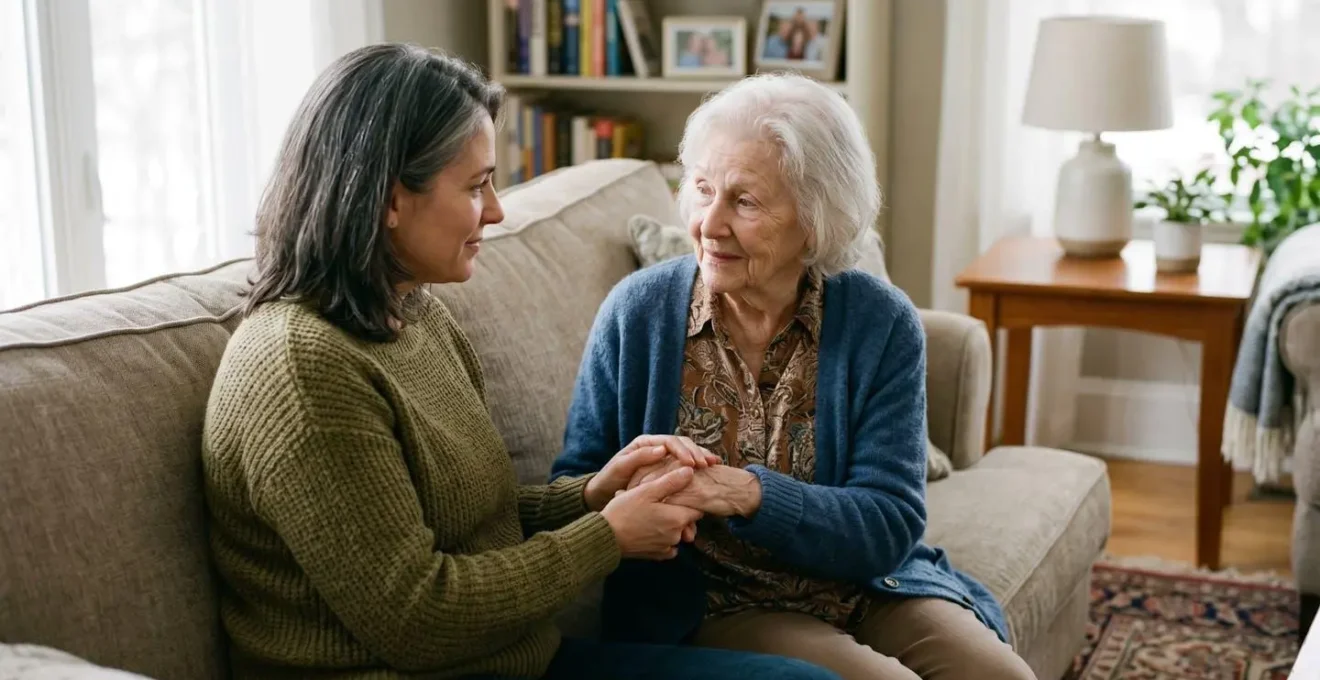
Distinguishing between normal ageing and dementia isn’t about counting forgotten keys; it’s about spotting when memory lapses begin to disrupt independent daily life.
- Benign forgetfulness is misplacing items; concerning memory loss is forgetting what those items are for.
- Reversible conditions like UTIs or dehydration can perfectly mimic dementia symptoms and must be ruled out first.
Recommendation: Frame the first doctor’s visit not as a test for dementia, but as a routine check-up to establish a « health baseline » for the future.
Watching a parent age brings a quiet, creeping anxiety. A forgotten name at a family gathering, a story repeated for the third time, keys found in the refrigerator—each instance triggers a silent, urgent question: is this just a normal part of getting older, or is it the beginning of something more serious, like Alzheimer’s? This fear is profound, pitting the love for a parent against the terror of a devastating disease. You find yourself in a state of hyper-vigilance, cataloguing every slip-up, caught between the fear of overreacting and the dread of not acting soon enough.
The common advice is to look for signs like difficulty with daily tasks or changes in mood, but this often creates more questions than answers. How much difficulty is too much? What’s the difference between a bad mood and a personality change? The internet provides endless checklists that can quickly turn a concerned child into a panicked diagnostician. But the real key isn’t found in a simple list of symptoms. It lies in understanding the *context* and *pattern* of these changes.
This article will not give you another generic checklist. Instead, it will provide a consultant’s framework to help you navigate this uncertainty. We will move beyond the platitudes to explore the crucial difference between benign cognitive changes and those that warrant a medical consultation. We will discuss the surprising concept of cognitive reserve, delve into the critical distinction between Mild Cognitive Impairment and dementia, and uncover the medical conditions that often masquerade as cognitive decline. Ultimately, this guide is designed to replace fear with a structured understanding, empowering you to know when to worry, and more importantly, how to act constructively.
To navigate this complex topic, we will explore the key facets of cognitive health in ageing, from the brain’s resilience to the practical steps of care and planning. This structured approach will provide clarity and a clear path forward.
Summary: Normal Forgetfulness or Dementia: A Guide for Worried Children
- Why Some People Have Brain Changes But No Dementia Symptoms
- How to Persuade a Stubborn Parent to See a Doctor About Memory Loss
- Mild Cognitive Impairment vs Alzheimer’s: What Is the Difference?
- The UTI Mistake: Why Urinary Infections Look Like Dementia in the Elderly
- When to Set Up Lasting Power of Attorney: Before the Diagnosis
- The Thirst Mechanism Failure: Why Elderly People Don’t Drink Enough Water
- Survival Rate vs Quality of Life: What Statistics Don’t Tell You About Cancer Treatment
- Hospice vs Hospital: Where Is the Best Place for End-of-Life Care?
Why Some People Have Brain Changes But No Dementia Symptoms
One of the most perplexing and ultimately hopeful findings in dementia research is the concept of cognitive reserve. It explains a phenomenon that has long puzzled neurologists: why do autopsies sometimes reveal brains riddled with the plaques and tangles characteristic of Alzheimer’s disease, yet the person showed few or no symptoms of dementia during their life? The answer lies in the brain’s remarkable ability to build resilience and find alternative ways to get a job done. Cognitive reserve is like a mental scaffolding, built up over a lifetime of learning and mental stimulation.
Think of it as the difference between a simple country road and a complex city grid. If the country road is blocked, traffic stops. In a city grid, traffic can be rerouted through countless other streets to reach the same destination. A brain with high cognitive reserve has a more complex and efficient neural network. When one pathway is damaged by disease, it can flexibly reroute cognitive processes through alternate, healthy pathways. This is why a person with a lifetime of intellectual engagement—through education, a challenging career, or even active hobbies—may be able to compensate for underlying brain pathology for years.
This isn’t just a theory; it’s backed by significant research. For example, a 2024 systematic review confirmed that building cognitive reserve in early, middle, and late life all have protective effects against dementia. Research from Alzheimer’s Research UK has even shown that people who regularly challenge their brains with activities like reading and playing games develop Alzheimer’s symptoms around five years later than those who don’t, even when brain pathology is present. This underscores that a diagnosis is not solely determined by what’s seen on a brain scan, but by how that pathology affects a person’s ability to function in the world.
How to Persuade a Stubborn Parent to See a Doctor About Memory Loss
Knowing something is wrong is one thing; getting a reluctant parent to acknowledge it and see a doctor is a monumental challenge. The suggestion can be met with denial, anger, or fear. They may feel you are questioning their competence or trying to take away their independence. For this reason, the approach must be one of empathy, strategy, and collaboration, not confrontation. The goal is to frame the visit in a non-threatening way, focusing on overall health rather than singling out memory as a « problem. »
Instead of saying, « Mum, you’re forgetting everything, you need to see a doctor, » try a more collaborative approach. You could tie the visit to another health concern or frame it as a routine part of healthy ageing. For example: « Dad, we’re both getting older. I’m going for a full health check-up to get a baseline. Why don’t we both do it so we have something to compare against in a few years? » This reframes the visit as a proactive, intelligent step for future health monitoring, not a test for a present failure. It makes you a partner in the process, not an accuser.
Preparing for the conversation and the subsequent appointment is crucial. Document specific examples of your concerns—not in an accusatory way, but as objective observations. For instance, « Noticed difficulty managing the TV remote last Tuesday » is more helpful than « Can’t work the TV anymore. » Experts at the Mayo Clinic provide a clear roadmap for this process, which can be adapted into a practical plan.
Your action plan for a successful doctor’s visit
- Choose your timing: Initiate the conversation when you are both calm and have plenty of time. Avoid bringing it up during a moment of frustration.
- Frame the visit: Emphasise that this is about establishing a « baseline » for future health monitoring, or link it to another check-up (e.g., blood pressure).
- Prepare your notes: Document specific examples of memory changes, when they started, and any other symptoms. Also, prepare a complete list of all medications, including over-the-counter drugs and supplements.
- Suggest an ally: Offer to go with them to the appointment, or suggest another trusted family member or friend join. This provides support and another observer.
- Focus on the benefits: Gently explain that early diagnosis of any issue allows for better management, planning for the future, and access to potential treatments that can help maintain independence for longer.
Mild Cognitive Impairment vs Alzheimer’s: What Is the Difference?
When memory problems become noticeable but don’t yet seriously interfere with everyday life, a person may be diagnosed with Mild Cognitive Impairment (MCI). This is a crucial concept to understand because it occupies the « grey area » between normal age-related cognitive changes and the more severe decline of dementia. A person with MCI might forget conversations or misplace things more often, but they are still able to perform their essential daily activities independently. They can still manage their finances, drive, and cook a meal, even if it takes more effort or requires using more memory aids like lists.
The key differentiator between MCI and Alzheimer’s disease is the degree of functional impairment. Alzheimer’s dementia is defined by a cognitive decline so severe that it interferes with a person’s ability to be independent in their daily life. This involves not just basic self-care (activities of daily living like dressing and eating), but also more complex tasks known as instrumental activities of daily living (IADLs). These include managing medications, handling finances, using technology, or preparing meals. A person with MCI is still functional; a person with dementia is not.
As the image illustrates, someone in the MCI stage can still successfully navigate complex household management, a key IADL. While they may need more notes or concentration, the fundamental ability remains intact. In contrast, someone with Alzheimer’s might be unable to understand a bill or follow the steps required to pay it. It’s important to know that MCI doesn’t always lead to dementia. While it does increase the risk, some people with MCI remain stable for years, and in some cases, their symptoms may even improve if caused by an underlying, treatable issue. A 2024 study found the annual progression rate from MCI to dementia is 15.7%, but also noted that a significant portion of cases can remain in that stable, prodromal stage for a long time.
The UTI Mistake: Why Urinary Infections Look Like Dementia in the Elderly
One of the most critical steps in evaluating sudden cognitive changes in an older person is to rule out « dementia mimics »—acute medical conditions that can produce symptoms like confusion, agitation, and memory loss. Among the most common and often overlooked of these is a simple Urinary Tract Infection (UTI). In a younger person, a UTI typically presents with clear physical symptoms: pain, burning, and a frequent urge to urinate. In the elderly, these classic signs are often absent. Instead, the infection can manifest as a sudden and dramatic change in mental state, a condition known as delirium.
This phenomenon happens for several reasons. The ageing immune system doesn’t respond as robustly, so the typical signs of infection like fever may be less pronounced. Furthermore, the body’s stress response to the infection can release a cascade of inflammatory chemicals that cross the blood-brain barrier, disrupting normal brain function and leading to acute confusion. The person may suddenly become disoriented, experience hallucinations, or exhibit uncharacteristic aggression or withdrawal. To a worried family member, it can look exactly like a sudden, catastrophic worsening of dementia.
The scale of this issue is significant; research shows that up to 30% of hospital admissions for acute confusion in people over 70 are eventually traced back to a UTI. This highlights the absolute necessity of considering this reversible cause before jumping to conclusions about dementia.
Up to one-third of elderly patients hospitalized with UTIs can experience some degree of confusion and reduced awareness of their surroundings.
– Dr. Shouri Lahiri, Cedars-Sinai Neurosciences Critical Care Unit
The good news is that UTI-induced delirium is treatable. With a simple course of antibiotics, the confusion often clears up completely within days or weeks. This is why any sudden, acute change in a parent’s mental state should prompt an immediate call to their doctor to rule out a UTI or other infection.
When to Set Up Lasting Power of Attorney: Before the Diagnosis
The conversations about memory loss are difficult, but the ones about legal and financial planning can feel even more daunting. Yet, they are arguably the most critical discussions to have, and the mantra is simple: the time to act is now. A Lasting Power of Attorney (LPA) is a legal document that allows a person (the ‘donor’) to appoint one or more people (‘attorneys’) to make decisions on their behalf. There are two types: one for health and welfare, and one for property and financial affairs. The crucial requirement for setting up an LPA is that the donor must have ‘mental capacity’—the ability to understand the decision they are making and its consequences—at the time of signing.
Waiting until a dementia diagnosis is confirmed, or worse, until a crisis occurs, is often too late. Once a person loses mental capacity, they can no longer legally grant an LPA. The family is then faced with a much more complex, expensive, and stressful process of applying to the Court of Protection to be appointed as a ‘deputy’. This can take many months, during which time bank accounts may be frozen and decisions about care cannot be easily made, leaving both the parent and the family in a vulnerable and distressing limbo.
Therefore, setting up an LPA should be seen as a proactive and responsible part of life planning, much like writing a will. It should be done while your parent is still well and fully in control of their faculties. You can frame the conversation as a sensible step for the whole family. For example: « Mum, Dad, we’ve sorted out our wills, and the next thing on our list is setting up LPAs. It just makes sense that if anything ever happened to us, someone we trust could manage things. We think it’s a good idea for all of us to have them in place. » This approach normalises the process and presents it as a tool for empowerment and peace of mind, not a reaction to impending decline.
The Thirst Mechanism Failure: Why Elderly People Don’t Drink Enough Water
Alongside UTIs, another powerful « dementia mimic » is chronic dehydration. Much like an infection, a lack of adequate hydration can significantly impact cognitive function, causing confusion, drowsiness, and memory problems that are easily mistaken for signs of dementia. The problem is particularly insidious in older adults because the very mechanism that tells us we are thirsty becomes less reliable with age. The sensation of thirst diminishes, meaning a parent may be significantly dehydrated long before they actually feel thirsty.
Several other age-related factors compound this issue. Kidney function becomes less efficient at conserving water. Certain common medications, such as diuretics for high blood pressure, can increase fluid loss. Additionally, mobility issues can make it physically difficult to get a drink, and a fear of incontinence may lead some to deliberately restrict their fluid intake. The cumulative effect is that a significant portion of the elderly population lives in a state of chronic, low-level dehydration, which can have a profound impact on their brain health. Some studies indicate that between 17-28% of older adults in the United States are chronically dehydrated.
The cognitive symptoms of dehydration can appear gradually or quite suddenly. They include difficulty concentrating, headaches, irritability, and pronounced confusion or ‘brain fog’. For a caregiver, monitoring fluid intake is as critical as monitoring medication. It’s not enough to simply ask if they’ve had a drink; proactive strategies are needed. This can include leaving a water bottle with clear measurement marks in their line of sight, scheduling ‘drink times’ throughout the day, or offering foods with high water content like soups, fruits, and yogurts. Ensuring proper hydration is a simple, non-medical intervention that can yield dramatic improvements in cognitive clarity and overall well-being.
Survival Rate vs Quality of Life: What Statistics Don’t Tell You About Cancer Treatment
While this section’s title refers to cancer treatment, its core principle—the critical distinction between merely extending life and ensuring the *quality* of that life—is profoundly relevant to the journey of dementia care. In the early stages of a dementia diagnosis, the focus is often on diagnosis, treatment, and slowing progression. But as the condition advances, the conversation must evolve. It must shift from a purely medical focus on « survival rates » to a holistic and deeply personal focus on dignity, comfort, and quality of life.
What do statistics not tell you? They don’t tell you about the value of a person being in a familiar environment, surrounded by their own memories. They don’t measure the peace that comes from listening to a favourite piece of music, the comfort of a pet, or the simple joy of sitting in a sunny garden. A treatment that extends life by a few months but involves distressing hospital stays and aggressive procedures may, for some, be a far worse outcome than a shorter life lived with peace and comfort at home. There is no right or wrong answer; the « best » path is deeply individual.
This is why early conversations about future care preferences, as enabled by a Health and Welfare LPA, are so vital. These discussions allow a person to define what « quality of life » means to them while they still have the capacity to do so. Do they want every possible medical intervention, or do they prioritise comfort above all else? Would they prefer to be at home, or in a specialised care facility? These are not easy conversations, but they are a profound act of love. They ensure that a person’s values and wishes continue to be honoured, even when they can no longer voice them themselves. It shifts the goal from fighting a disease to honouring a person.
Key takeaways
- Normal forgetting is misplacing keys; concerning memory loss is finding the keys and not knowing what they are for.
- Sudden, acute confusion is a medical emergency. Always rule out reversible causes like UTIs and dehydration before assuming dementia.
- The right time to set up a Lasting Power of Attorney (LPA) is before it’s needed, while your parent still has full mental capacity to make the decision.
Hospice vs Hospital: Where Is the Best Place for End-of-Life Care?
As a progressive illness like dementia reaches its advanced stages, the question of the best environment for care becomes paramount. The traditional model often involves frequent hospitalisations to manage acute complications. However, a hospital, with its bright lights, constant noise, and focus on curative treatment, is often a disorienting and stressful environment for a person with advanced dementia. This is where the philosophy of hospice and palliative care offers a crucial alternative, shifting the focus from curing the incurable to providing maximum comfort and dignity.
Hospice care is not about « giving up. » It is a positive and proactive choice to prioritise quality of life in the final months, weeks, and days. It can be provided in a dedicated hospice facility, a nursing home, or, most commonly, in the person’s own home. A multidisciplinary team, including doctors, nurses, social workers, and aides, works together to manage symptoms like pain, agitation, and shortness of breath. The goal is to create a peaceful, supportive environment for both the patient and their family. In contrast to the sterile environment of a hospital, hospice care embraces the comfort of the familiar.
Choosing hospice care means affirming that a person’s final chapter should be defined by peace, not by painful and often futile medical procedures. It allows families to step away from the role of medical managers and return to being spouses, sons, and daughters. It provides the space for connection, for saying goodbye, and for ensuring that a loved one’s final journey is as gentle and dignified as possible. This decision, ideally guided by the person’s own wishes expressed earlier, is the ultimate expression of person-centred care. It honours a life by providing a good death.
The journey from noticing the first memory slip to navigating end-of-life decisions is long and emotionally taxing. The key is to approach it not with panic, but with a plan. By seeking clarity, ruling out reversible causes, and putting legal and care preferences in place early, you transform a frightening unknown into a manageable path. Your role as a child can evolve from one of worried observer to that of an empowered, effective advocate for your parent’s well-being and dignity. To begin this process, the next logical step is to formalise these care preferences and legal protections for the future.