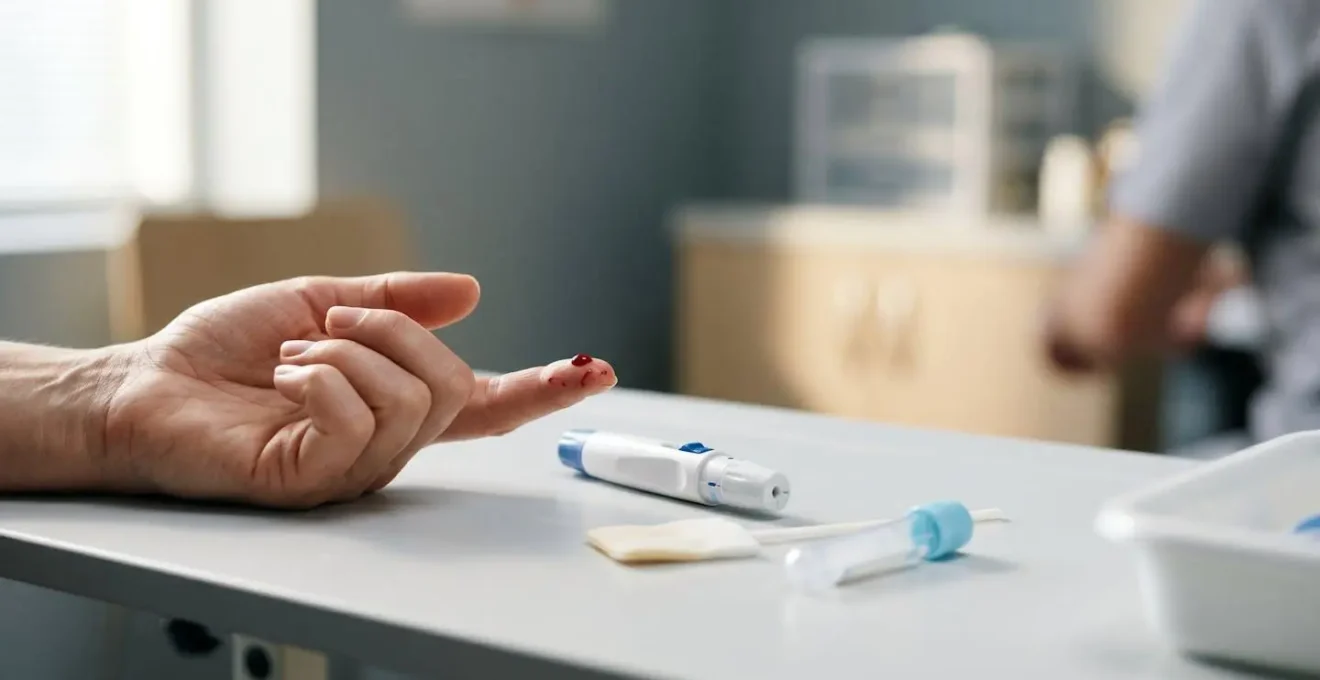
The accuracy of a home blood test depends less on the laboratory and more on you.
- The biggest source of error is not the analysis but the « pre-analytical » phase: how the sample is collected, handled, and transported.
- Finger-prick samples are highly susceptible to haemolysis and contamination, which can make results for certain markers clinically unreliable.
Recommendation: Use home tests for general wellness tracking, not for diagnosis. For any result that is abnormal or causes concern, the only safe next step is a consultation and a clinical-grade venous blood draw with your GP.
The rise of direct-to-consumer health products offers undeniable convenience. With just a few clicks, companies like Superdrug deliver a home blood testing kit to your door, promising insights into everything from vitamin levels to hormone balance. The premise is empowering: take control of your health data without the wait for a GP appointment. But as a clinical biochemist, I must caution that this convenience comes at a significant, often hidden, cost to accuracy and reliability.
Most people assume that if the test is processed in an accredited lab, the result must be as good as one from the NHS. This is a critical misunderstanding. The lab’s analysers are indeed highly precise, but they can only measure the sample they receive. The journey from your fingertip to the lab bench is fraught with potential errors—a concept we in the field call pre-analytical variability. Unlike a controlled clinical setting where a trained phlebotomist performs a venous blood draw, the home-sampling process introduces dozens of variables that can fundamentally alter the composition of your blood before it’s ever tested.
This guide does not aim to dismiss home testing entirely. Instead, it serves to pull back the curtain on the entire diagnostic process. We will dissect the specific points of failure, from the moment the lancet touches your skin to the unscientific basis of certain popular tests. By understanding the limitations your GP and lab technicians are acutely aware of, you can make a truly informed decision about whether a home test is the right tool for your health query, or simply a source of false reassurance or unnecessary anxiety.
To navigate this complex topic, this guide breaks down the critical differences and hidden risks. We will explore the scientific realities behind sample collection, the validity of popular tests, and the operational pressures within NHS labs to give you a complete picture.
Summary: Home Blood Tests vs. a GP Visit: A Clinical Biochemist’s Guide to Accuracy
- Why Your Finger-Prick Blood Sample Might Fail Before It Reaches the Lab
- How to Get Enough Blood for a Home Kit Without Fainting
- IgG Food Intolerance Tests vs NHS Allergy Clinics: Which Is Science-Based?
- The Vitamin D Mistake: Why You Might Be Treating the Wrong Deficiency
- When to Take a Hormone Test: The Cycle Day That Changes Everything
- NHS Health Check vs Private Full-Body MOT: Is the £300 Cost Justified?
- AncestryDNA vs NHS Genetics: Why Your Home Kit Can’t Diagnose Health Risks
- Why Are Pathology Results Delayed? The Reality Inside Overwhelmed NHS Labs
Why Your Finger-Prick Blood Sample Might Fail Before It Reaches the Lab
The single greatest weakness of any home blood test kit is the sample itself. A finger-prick (capillary) sample is fundamentally different and clinically inferior to a venous blood draw taken from your arm. The primary reason is its high susceptibility to pre-analytical errors, which occur before the sample is even analysed. The most significant of these is haemolysis, the rupture of red blood cells. When you squeeze your finger to produce a drop of blood, you exert physical pressure that can burst these delicate cells, releasing their contents (like potassium and certain enzymes) into the surrounding plasma. This artificially elevates the measured levels of these markers, leading to a false and potentially alarming result.
Furthermore, this process often introduces tissue fluid contamination. The clear fluid that surrounds your cells can mix with the blood, diluting it and rendering results for markers like lipid profiles or white blood cell counts inaccurate. These issues are not theoretical; they have a measurable impact. Some data shows lab rejection rates for finger-prick samples can be as high as 20-25%, compared to under 3% for professionally collected venous specimens. The risk is substantial, with some research indicating capillary samples have a haemolysis rate nearly 70% higher than venous draws.
When a lab rejects a sample, you are typically sent a new kit. However, many haemolysed or contaminated samples may not be visibly compromised enough for rejection. They are processed, and an inaccurate result is reported back to an unsuspecting consumer. This is a risk that is virtually eliminated in a clinical setting.
How to Get Enough Blood for a Home Kit Without Fainting
Given the risks of squeezing your finger too hard, the goal is to get your blood flowing freely before you even use the lancet. Many kit failures stem from an insufficient sample volume because the user’s hands are cold, leading to vasoconstriction (the narrowing of blood vessels). The single most effective technique to counter this is to increase blood flow to your fingertips through warmth and movement. Before you begin, stand up and swing your arms by your sides for a minute to encourage blood flow via gravity and motion. Then, you must warm your hands thoroughly.
This paragraph introduces a key practical technique. To properly prepare, it’s essential to ensure your hands are warm to promote blood flow. The image below illustrates the ideal method for this preparation.
As you can see, holding your hands under warm running water for several minutes is a simple but critical step. This promotes vasodilation, widening the capillaries and making it much easier to obtain a sufficient sample without excessive squeezing. It’s also important to stay hydrated in the hours leading up to the test. Dehydration reduces blood volume and makes collection more difficult. Finally, if you feel lightheaded at the sight of blood, always perform the test while seated to minimise the risk of injury from fainting (a vasovagal response).
Action Plan: Maximising Your Finger-Prick Sample Quality
- Hydrate Well: Drink a large glass of water 1-2 hours before collecting your sample to ensure optimal blood volume.
- Promote Blood Flow: Stand up, swing the arm you will use for 60 seconds, and then wash your hands in warm water for at least 2 minutes. Dry them thoroughly.
- Choose the Right Finger: Use the middle or ring finger of your non-dominant hand. Avoid the index finger or thumb as their skin is often thicker.
- Position Correctly: Lance the side of the fingertip, not the pad, as it has better blood supply and fewer nerve endings. Let gravity help by keeping your hand below your heart.
- Collect Passively: Do not « milk » or aggressively squeeze your finger. Gently massage from the base of the finger towards the tip to encourage a hanging drop to form, and let it fall into the collection tube.
IgG Food Intolerance Tests vs NHS Allergy Clinics: Which Is Science-Based?
One of the most popular categories of direct-to-consumer tests is for « food intolerance, » which typically measures Immunoglobulin G (IgG) antibodies to a wide array of foods. These tests claim to identify dietary triggers for symptoms like bloating, fatigue, or headaches. However, from a clinical and scientific standpoint, these tests have no established validity. The presence of IgG antibodies to a specific food does not indicate an intolerance; it indicates exposure and tolerance. Your immune system creates IgG antibodies as a normal response to foods you eat regularly.
Major professional and regulatory bodies worldwide are unified in their position against this form of testing. As The British Dietetic Association states unequivocally:
There is no convincing evidence to support the use of IgG testing to diagnose food intolerance. High levels of IgG antibodies to a food are more likely to indicate that the person eats that food regularly, not that they are intolerant to it.
– The British Dietetic Association, Food intolerance tests – are they scientifically backed?
This is not a minority opinion. A consensus of major professional organisations including the British Society for Allergy & Clinical Immunology (BSACI) and the American Academy of Allergy, Asthma and Immunology (AAAAI) have all published position statements concluding that IgG testing is an unproven and unvalidated method for diagnosing food intolerances. In contrast, an NHS allergy clinic uses evidence-based methods. This includes measuring IgE antibodies (involved in true allergic reactions), skin-prick tests, and supervised food challenges, all interpreted within the context of a detailed clinical history by a specialist. Paying for an IgG test is, therefore, not just a waste of money; it can lead to unnecessary and potentially harmful dietary restrictions based on clinically meaningless data.
The Vitamin D Mistake: Why You Might Be Treating the Wrong Deficiency
Vitamin D is another extremely common home test, and for good reason. Deficiency is widespread, particularly in countries with limited winter sunlight like the UK. A home test can accurately tell you if your vitamin D level is low. However, this is a perfect example of how a single data point without clinical context can be misleading. Simply discovering a low vitamin D level and starting supplementation may be treating a symptom, not the underlying cause.
While insufficient sun exposure and dietary intake are the most frequent culprits, a deficiency can also be a red flag for a more serious, undiagnosed medical condition. This is a critical point made by clinical experts in official NHS guidelines. Dr. Moya O’Doherty, a Consultant Chemical Pathologist, clarifies the differential diagnosis:
The major causes of vitamin D deficiency are lack of sun exposure and/or poor dietary intake. Other common causes are malabsorption and underlying disease such as kidney or liver dysfunction, for which specific investigations may be appropriate.
– Dr Moya O’Doherty, Consultant Chemical Pathologist, Royal United Hospitals Bath NHS Foundation Trust – Vitamin D Deficiency in Adults Clinical Guideline
Conditions like coeliac disease, Crohn’s disease, or inflammatory bowel disease can impair the body’s ability to absorb vitamin D from the gut (malabsorption). Chronic kidney or liver disease can prevent the body from converting vitamin D into its active form. By simply buying a supplement based on a home test result, you could be masking the signs of a condition that requires urgent medical investigation and management. A GP, upon seeing a low vitamin D result, would use your full clinical history to decide if further tests—for liver function, kidney function, or coeliac screening—are necessary. This interpretive step is the most valuable part of the diagnostic process, and it is completely absent with a direct-to-consumer test.
When to Take a Hormone Test: The Cycle Day That Changes Everything
For women, testing hormones like FSH (Follicle-Stimulating Hormone), LH (Luteinizing Hormone), oestrogen, and progesterone can seem like a proactive way to understand fertility or perimenopausal changes. However, the results of these tests are meaningless without one critical piece of information: the day of your menstrual cycle on which the sample was taken. Hormone levels are not static; they fluctuate dramatically and predictably throughout the cycle to regulate ovulation and menstruation.
This paragraph introduces the concept of cyclical hormonal changes. To appreciate this fluctuation, the following illustration provides a minimalist, conceptual representation of these phases.
As the visual metaphor suggests, each phase of the cycle has its own unique hormonal signature. For example, a fertility investigation typically requires a blood sample to be taken on Day 3 of the cycle (Day 1 being the first day of your period) to get a baseline reading of FSH and oestrogen. A test for ovulation, on the other hand, measures progesterone levels around Day 21 (in a 28-day cycle) to confirm that an egg has been released. A random hormone test taken on an arbitrary day of the cycle will produce a result that is impossible to interpret.
The « normal » reference ranges provided by a lab are always tied to a specific phase of the cycle (e.g., follicular, ovulatory, luteal). Without this context, a result might look abnormally high or low when it is, in fact, perfectly normal for that particular day. A GP or endocrinologist would never order a hormone panel without first instructing the patient on precisely when to have the blood drawn. Most home testing kits provide some guidance, but the onus is on the consumer to track their cycle accurately and follow instructions perfectly, introducing another potential for significant error.
NHS Health Check vs Private Full-Body MOT: Is the £300 Cost Justified?
The allure of a private « Full-Body MOT » is the promise of a comprehensive overview of your health, testing dozens of markers that go far beyond the scope of a standard NHS Health Check. While this may seem more thorough, the clinical value of such widespread, untargeted screening is highly debatable. The NHS Health Check is an evidence-based programme, focusing on a handful of key markers for cardiovascular risk (like cholesterol and blood pressure) in a specific age group (40-74) where intervention is proven to be effective. It is targeted, cost-effective, and designed to prevent specific outcomes.
In contrast, a comprehensive private panel often includes a battery of tests that are not clinically indicated, meaning you have no symptoms or specific risk factors to warrant them. This approach significantly increases the likelihood of a false positive—a result that falls just outside the normal range by chance, causing unnecessary anxiety and leading to further, often invasive and costly, investigations. More importantly, many of these comprehensive panels still rely on the flawed finger-prick sample.
The fundamental difference in sample quality remains the deciding factor. Venous blood draws are the undisputed clinical gold standard because they provide a large, clean, and stable sample. This is not just a matter of preference; it directly impacts accuracy for specific tests. As laboratory reviews confirm, while capillary blood can be adequate for some markers, it is known to be unreliable for others. Finger-prick samples can produce inaccurate results for lipids (cholesterol), white blood cell counts, and certain hormones due to the unavoidable issues of haemolysis and tissue-fluid contamination discussed earlier. Therefore, even if you pay a premium for a wider array of tests, the very foundation of those results may be compromised if the sample is self-collected.
AncestryDNA vs NHS Genetics: Why Your Home Kit Can’t Diagnose Health Risks
Consumer genetic tests, like those from AncestryDNA or 23andMe, have opened up a fascinating window into our heritage and personal traits. However, it is critically important to understand the profound difference between this type of « recreational genomics » and the clinical-grade genetic testing conducted by the NHS. A home DNA kit uses genotyping technology, which checks for specific, pre-selected genetic variants (SNPs) on a DNA chip. It is a screening tool, not a diagnostic one.
NHS genetic testing, by contrast, is a diagnostic procedure ordered by a clinician to answer a specific health question. It often involves full gene sequencing, a much more comprehensive and expensive method that reads every letter of a gene’s code to look for any potential disease-causing mutation. This process is used to diagnose conditions like cystic fibrosis, Huntington’s disease, or to determine an individual’s risk for hereditary cancers if they have a strong family history.
Furthermore, NHS testing is always accompanied by genetic counselling. A trained professional helps the patient understand the implications of a result, which can be complex and emotionally charged. They can explain concepts like « incomplete penetrance » (having a gene but not developing the disease) or a « Variant of Unknown Significance » (a genetic change that has not yet been classified as benign or pathogenic). Receiving a raw data report from a consumer company with a « potentially increased risk » for a condition like Alzheimer’s, without this expert context, can be profoundly frightening and misleading. These companies are not medical providers and are very clear in their terms of service that their reports are not a substitute for medical advice or diagnosis.
Key Takeaways
- The primary source of inaccuracy in home blood tests is the « pre-analytical » phase: sample collection, handling, and transport errors.
- Finger-prick (capillary) samples are inherently prone to haemolysis and contamination, which can lead to false results, especially for lipids, cell counts, and certain minerals.
- Tests like IgG for food intolerance lack scientific validity, while even valid tests for things like Vitamin D or hormones require clinical context and precise timing to be meaningful.
Why Are Pathology Results Delayed? The Reality Inside Overwhelmed NHS Labs
When comparing the instant gratification of a home test with the sometimes lengthy wait for NHS results, it’s easy to assume the delay is due to inefficiency. The reality is far more complex. Centralised NHS pathology labs operate on an industrial scale, processing millions of samples under immense pressure. The entire system is built around ensuring accuracy and patient safety, which involves numerous checks and balances that are absent in the direct-to-consumer model. The journey of a hospital sample is a tightly controlled chain of custody, but it is not infallible.
As one comprehensive study highlighted, the vast majority of errors do not happen in the analytical phase. This is a crucial insight into laboratory quality management:
More than 60% of errors occurred in the pre-analytical stage of laboratory testing and may impair the clinical decision-making process. The pre-analytical phase comprises all events from the time a test requisition made by a physician until the time the sample analyzed at the lab.
– PMC Clinical Laboratory Study, Evaluation of pre-analytical specimen rejection using Six Sigma metrics
This focus on pre-analytical quality is why NHS labs have rigorous sample acceptance criteria. Furthermore, the infrastructure is both critical and vulnerable, as demonstrated by the fallout from cyberattacks.
Case Study: The 2024 Synnovis Ransomware Attack
The June 2024 ransomware attack on Synnovis, a major pathology provider for several South London NHS trusts, had a catastrophic impact on services. In the first two weeks alone, the incident led to nearly 1,700 cancelled elective procedures and over 10,000 postponed outpatient appointments. Blood testing services were reduced to just 10% of their normal capacity. This real-world event starkly illustrates the immense reliance of the entire healthcare system on this centralised diagnostic infrastructure and the profound disruption that occurs when it is compromised, with recovery taking many months.
So, while delays can be frustrating, they are often a reflection of a system prioritising safety, managing immense volume, and navigating unforeseen crises. The value of a GP-led test is not just the result, but its integration into this robust, albeit strained, clinical ecosystem.
Ultimately, the choice between a home test and a GP visit is not a simple question of convenience versus waiting. It is a decision between an isolated, context-free data point and a clinically interpreted, evidence-based diagnostic process. Home kits can be a useful tool for curious individuals tracking general wellness trends, but they are not a shortcut to a medical diagnosis. For any health concern, the expertise, context, and follow-up care provided by a GP, supported by the rigorous standards of an NHS lab, remain the undisputed gold standard.