The speed of your recovery from prostate surgery depends far less on the robot and far more on your surgeon’s experience and your own physical preparation.
- Robotic surgery offers a clear advantage in early functional recovery, but long-term outcomes for continence and erectile function converge with open surgery over time.
- The single most powerful action you can take to accelerate your recovery is engaging in a structured « prehabilitation » program before your operation.
Recommendation: Shift your focus from « which tool is best? » to « who is the most experienced team? » and start a pelvic floor and core strengthening program immediately.
Receiving a prostate cancer diagnosis is a profound moment, quickly followed by a cascade of complex decisions. Among the most significant is the choice of surgical approach. You’ve likely heard the terms: open, laparoscopic, and the most modern, robotic-assisted surgery. The narrative surrounding robotic procedures is powerful, often emphasizing it as « minimally invasive » with the promise of a dramatically faster, less painful recovery. This leads to the crucial question that weighs on every patient’s mind: is the recovery really faster?
While the marketing is appealing, the reality is far more nuanced. The conversation in medical circles is shifting away from a simple « robot vs. scalpel » debate. As a consultant urologist specializing in these procedures, I can tell you that the technology is only one part of the equation. The true determinants of your recovery timeline and functional outcomes—your return to continence and sexual function—are a triad of factors: the surgeon’s experience, your body’s readiness for the operation, and a realistic understanding of the healing process. The robot is an exceptional instrument, but it is the surgeon’s hand that guides it and the patient’s preparation that lays the groundwork for success.
This article will dissect the claims and provide a clear, evidence-based perspective. We will move beyond the myths to explain the surgeon’s crucial role, how you can actively prepare your body to speed up healing, and what a realistic recovery timeline actually looks like. The goal is to empower you to ask the right questions and take control of the variables that truly matter for your outcome.
To navigate this critical topic, we’ve structured this guide to address the most pressing questions patients face. The following sections will break down the key components of a successful robotic surgery journey, from preoperative preparation to postoperative awareness.
Contents: Prostate Surgery Recovery and the Role of Robotics
- Why the Robot Doesn’t Perform the Surgery: The Surgeon’s Role Explained
- How to Prepare Your Core Muscles for a Robotic Procedure to Speed Up Healing
- Robotic vs Open Surgery: Which Has a Lower Risk of Erectile Dysfunction?
- The ‘Keyhole’ Myth: Why Less Pain Doesn’t Mean You Can Run a Marathon in Week 2
- When to Choose Active Surveillance Instead of Robotic Surgery?
- Prostate Cancer or Enlarged Prostate: How to Tell the Difference via Symptoms
- Post-Op Pain vs Complication Pain: How to Tell the Difference
- How to ‘Wait Well’ While on the NHS Surgery Waiting List for 18 Months
Why the Robot Doesn’t Perform the Surgery: The Surgeon’s Role Explained
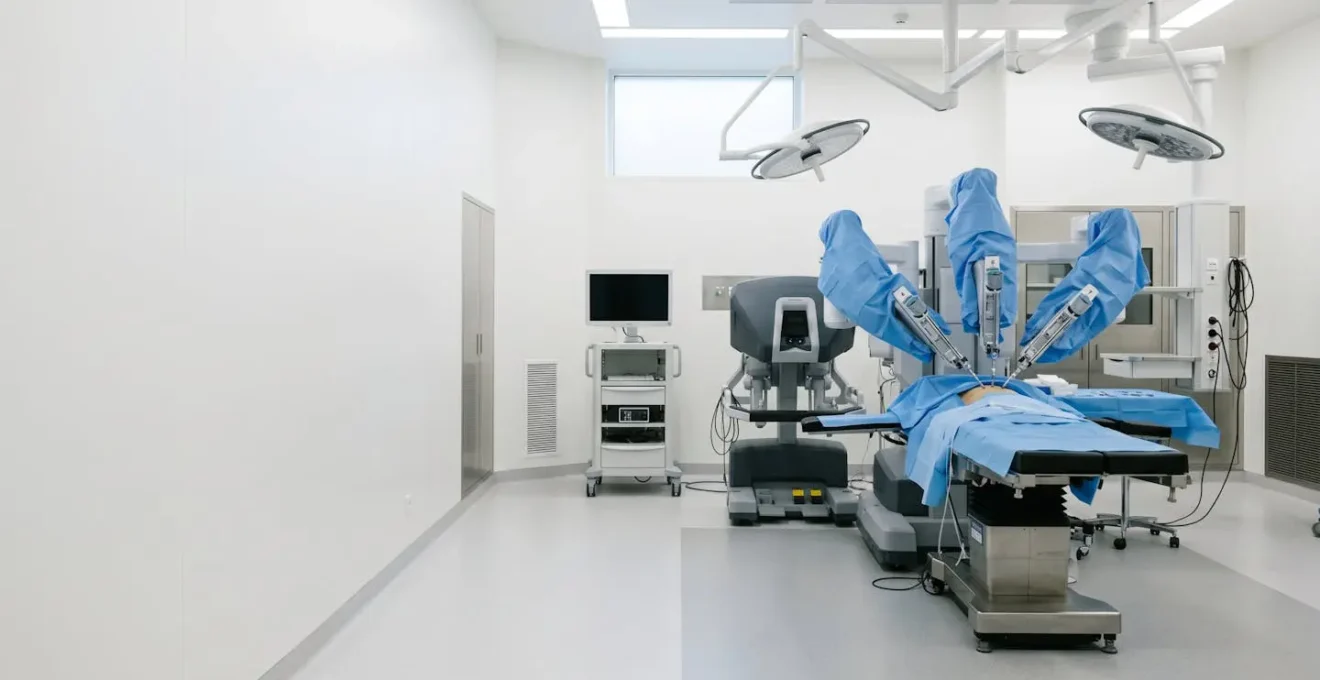
The first and most critical misconception to dispel is that the robot performs the surgery. It does not. The surgical robot is a master-slave system; it is a set of highly advanced tools that I, the surgeon, control from a console a few feet away. It cannot think, make decisions, or perform any action independently. Every movement, every suture, every precise dissection is a direct translation of my hand movements. Therefore, the outcome is not determined by the machine, but by the hundreds, or thousands, of hours of experience the surgeon has with that machine.
The robot’s true benefit is that it enhances a skilled surgeon’s ability. It provides a magnified, 3D high-definition view of the surgical field and uses wristed instruments that have a greater range of motion than the human hand. This allows for incredibly precise movements in the confined space around the prostate. However, this potential is only realized through extensive practice. In fact, a single-surgeon learning curve study demonstrated that operative time can decrease from 153 minutes to 106 minutes as experience grows. This isn’t the robot getting faster; it’s the surgeon achieving mastery.
Furthermore, the « surgeon » is actually a highly coordinated team. The success of the procedure also depends heavily on the patient-side assistant surgeon who works alongside the robot. Your primary question should not be « do you use a robot? » but rather, « how many robotic prostatectomies have you and your team performed? » An experienced surgeon with a consistent team, using the robot as their preferred instrument, is the gold standard for surgical-system integration and a key predictor of a successful outcome.
How to Prepare Your Core Muscles for a Robotic Procedure to Speed Up Healing
While choosing an experienced surgeon is paramount, the most impactful variable within your direct control is preoperative preparation, or « prehabilitation. » This is the process of actively improving your physical condition before surgery to enhance your postoperative recovery. For prostate surgery, this centers on strengthening your pelvic floor and deep core muscles. These are the muscles responsible for bladder control, and strengthening them before they are inevitably affected by surgery gives you a significant head start on regaining continence.
The evidence supporting this is compelling. Robust research confirms that prehabilitation programs significantly improve the speed of bladder control recovery and can even lead to shorter hospital stays. Think of it as training for a specific physical event. You wouldn’t run a marathon without training, and surgery is your body’s marathon. A targeted program helps your brain build a stronger connection with these crucial muscles, making it easier to « find » and activate them after the procedure when swelling and a catheter can obscure the signals.
A comprehensive prehabilitation plan, often initiated 4-6 weeks before surgery, is a multimodal effort. A formal case study outlines an ideal program consisting of integrated components: supervised pelvic floor training and aerobic exercise, a nutritional assessment to correct deficiencies and optimize protein intake for healing, and mental health support to manage the natural anxiety that accompanies a cancer diagnosis and surgery. This patient-led prehabilitation is not just about physical exercise; it’s a holistic approach to arriving at the operating theatre in the best possible state for healing.
Robotic vs Open Surgery: Which Has a Lower Risk of Erectile Dysfunction?
The potential impact on erectile function is, understandably, a primary concern for most men facing prostatectomy. The nerves responsible for erections are delicate structures that run along the surface of the prostate. The primary advantage of robotic surgery in this domain is the enhanced 3D vision and wristed instruments, which theoretically allow for a more precise, « nerve-sparing » dissection. This often leads to an earlier return of erectile function, particularly in lower-risk patients.
However, when we look at the long-term data, the picture becomes more nuanced. A significant prospective trial compared outcomes at the 12-month mark. It found that while robotic surgery had a slight edge, the difference was modest: a 70.4% erectile dysfunction (ED) rate after robotic surgery versus 74.7% after open surgery. The data suggests that over time, the outcomes begin to converge, highlighting once again that surgeon skill in performing the nerve-sparing technique is likely more critical than the tool used.
The table below, drawing from extensive research, illustrates this dynamic of short-term advantage versus long-term convergence. It underscores that while the robotic approach may accelerate the initial phase of functional recovery, the ultimate outcome is heavily influenced by factors like the surgeon’s case volume and the patient’s baseline function.
| Time Point | Robotic-Assisted (RALP) | Open Surgery (RRP) | Clinical Significance |
|---|---|---|---|
| 3 months post-op | Enhanced recovery (low/intermediate-risk) | Lower recovery rates | Robot shows early advantage |
| 12 months post-op | 70.4% ED rate | 74.7% ED rate | Modest difference (4.3%) |
| 8 years post-op | 66% ED rate | 70% ED rate | Outcomes converge over time |
| Key Factor | Surgeon experience matters more than technique | 500+ cases shows optimal outcomes | |
Ultimately, the choice of technique is part of a complex discussion. The potential for earlier recovery of erectile function with the robotic approach is a valid consideration, but it must be weighed against other factors, such as the surgeon’s proficiency and the specific characteristics of your cancer. This is a clear example where the surgical tool is not the definitive factor for the surgical outcome.
The ‘Keyhole’ Myth: Why Less Pain Doesn’t Mean You Can Run a Marathon in Week 2
One of the most significant advantages of robotic surgery is the reduction in postoperative pain and a shorter hospital stay. The small « keyhole » incisions, as opposed to a large abdominal incision, mean less muscle trauma and faster initial mobilization. In fact, research on robotic prostatectomy recovery shows that most patients are discharged within 24 hours. This leads many to believe that the overall recovery is a simple, rapid process. This is the « keyhole myth. »
It is crucial to understand that while the external wounds are small, the internal surgery is identical. The prostate has been removed, and the bladder has been reconnected to the urethra. This is a major internal reconstruction that requires significant time to heal, regardless of the size of the skin incisions. Less pain can be a deceptive signal, tempting patients to do too much, too soon. Overexertion in the first few weeks can lead to complications like bleeding, hernias, or increased pelvic pain, ultimately delaying your overall recovery.
A successful recovery is not a race; it is a phased, gradual process. You must respect the internal healing that you cannot see. The focus should be on achieving specific recovery milestones, not on a generic feeling of « being better. » Here is a realistic week-by-week guide to what you should be aiming for:
- Week 1-2: Focus on mobilization. Walk immediately after the procedure. The catheter is typically removed within 4-6 days. Your primary restriction is to avoid lifting anything heavier than a kettle.
- Week 2: You can begin light aerobic exercises like brisk walking. Driving is usually permitted after approximately two weeks, once you are off all prescription pain medication and can comfortably perform an emergency stop.
- Week 4: Light weightlifting can be resumed. Most patients with office-based jobs return to work within 2-4 weeks.
- Week 4-6: For those with physically demanding jobs, a return to full duties is not advised. Light duty for 4-6 weeks is the standard recommendation.
- Months 3-12: This period is dedicated to the gradual improvement of continence and erectile function. Full bladder control is typically regained within 3 months for most men who have undergone prehabilitation.
When to Choose Active Surveillance Instead of Robotic Surgery?
The diagnosis of prostate cancer does not automatically mean surgery is the only or best option. For many men with low-risk, slow-growing prostate cancer, Active Surveillance (AS) is the preferred management strategy. This is not a « do nothing » approach; it is a proactive and rigorous monitoring program designed to avoid or delay the side effects of treatment (surgery or radiation) for as long as possible, without compromising the chance for a cure if the cancer shows signs of progressing.
The decision to opt for AS is a prime example of shared decision-making between you and your urology team. It is typically recommended for men whose cancer is:
- Low-grade: A Gleason score of 6 (Grade Group 1).
- Low-volume: Present in only a small number of biopsy cores, with a small percentage of cancer in each core.
- Confined to the prostate: No evidence of spread, with a low PSA level (typically under 10 ng/mL).
A multi-parametric MRI (mpMRI) of the prostate is also a crucial tool in confirming that a cancer is suitable for AS.
The AS protocol involves regular PSA blood tests (every 3-6 months), periodic digital rectal exams, and follow-up mpMRI scans (every 1-2 years). A repeat biopsy may be recommended if there is a significant change in any of these markers. The goal is to track the cancer’s behavior over time. Many men can remain on AS for years, or even for the rest of their lives, without needing aggressive treatment. Choosing AS is a valid and often wise decision to preserve quality of life when the cancer itself poses a very low threat.
Prostate Cancer or Enlarged Prostate: How to Tell the Difference via Symptoms
One of the most confusing aspects for many men is the significant overlap in symptoms between prostate cancer and a benign, non-cancerous condition called Benign Prostatic Hyperplasia (BPH), or an enlarged prostate. As men age, the prostate naturally enlarges. This growth can squeeze the urethra, causing a variety of urinary issues such as a weak stream, difficulty starting urination, or needing to urinate frequently, especially at night (nocturia). The critical point to understand is that BPH is by far the most common reason for these symptoms.
Importantly, according to MD Anderson Cancer Center, early-stage, curable prostate cancer does not usually cause any symptoms at all. It is typically detected through screening with a PSA blood test and a digital rectal exam. When prostate cancer does cause symptoms, it often means the disease is more advanced. This is why it is impossible and dangerous to try and self-diagnose based on urinary symptoms alone. Any man experiencing new or worsening urinary issues must consult a doctor for a proper evaluation.
The evaluation will involve a PSA test, a physical exam, and potentially an mpMRI scan. These tools help the clinician differentiate between BPH and cancer. While the symptoms may feel identical, their underlying causes and treatments are vastly different. A common analogy is that BPH is like a growing apple that squeezes the core from the outside, while prostate cancer often grows within the « peel » or outer zone of the prostate, not causing urinary obstruction until much later. This highlights the vital importance of regular screening for men over 50, or earlier for those with a family history of the disease.
Post-Op Pain vs Complication Pain: How to Tell the Difference
After robotic surgery, some level of discomfort is expected and normal. You will experience incisional pain at the small « keyhole » sites and a deeper, internal ache or pelvic pressure from the main surgery. This is « good pain »—a sign that your body has undergone the procedure and is beginning the healing process. This normal post-operative pain should be at its peak for the first 48-72 hours and then gradually improve each day. It should be well-managed by the pain medication prescribed to you.
However, it is crucial to be able to distinguish this normal healing pain from « bad pain, » which may signal a complication. Complication pain behaves differently. It may start a few days after you feel you’re improving, it might get progressively worse instead of better, or it may have a different character—sharp, stabbing, or radiating to unusual places. Being vigilant and aware of your body is key. You are the best monitor for your own recovery, and knowing what to look for can ensure that any potential issue is addressed promptly.
To help patients self-triage their symptoms, I recommend using the S.C.A.L.E. framework. It provides a structured way to assess your pain and decide when to rest and when to call your surgical team.
Your Action Plan: The S.C.A.L.E. Self-Triage Framework
- Severity: Is the pain getting progressively worse rather than gradually better? Pain that intensifies after day 3-4 post-op is a red flag.
- Character: What does it feel like? A sharp, stabbing pain is different from a dull, recovery ache. A burning sensation during urination is normal initially; however, sharp abdominal pain that radiates to your shoulder could indicate a problem.
- Associated Symptoms: Are there other warning signs? A fever above 100.4°F (38°C), persistent nausea or vomiting, an inability to pass gas, or significant swelling, redness, or discharge from incisions require an immediate call.
- Location: Where is the pain and does it radiate? Discomfort at the incision sites is expected. Pain that travels to your leg, chest, or other unusual areas needs to be evaluated.
- Evolution: How has it changed over time? Normal post-op pain shows daily improvement after the initial 72 hours. Pain that plateaus for days or worsens after day 5 should be reported.
Trust your instincts. It is always better to call your surgical team with a concern that turns out to be nothing than to ignore a potential complication.
Key Takeaways
- The skill and experience of your surgeon and their team are the most critical factors for a successful outcome, far more than the robot itself.
- « Prehabilitation »—strengthening your pelvic floor and core muscles *before* surgery—is the most powerful tool you have to accelerate your recovery of continence.
- Realistic expectations are essential. While robotic surgery allows for less initial pain, internal healing is a gradual process that requires respecting activity limitations and recovery milestones.
How to ‘Wait Well’ While on the NHS Surgery Waiting List for 18 Months
For patients in the UK, a prostate cancer diagnosis is often followed by placement on a lengthy NHS waiting list for surgery. Facing a wait that can extend up to 18 months is understandably a source of significant anxiety. The immediate fear is that the cancer will grow or spread during this period. However, it’s essential to start with a reassuring and evidence-based fact: for most localized prostate cancers, this waiting period does not negatively impact the final outcome. In fact, a 2024 study on surgical wait times found that this delay is not associated with worse oncological or psychosocial outcomes after robotic prostatectomy.
Therefore, you must reframe this waiting period. It is not a passive delay; it is an active opportunity. This is your « prehabilitation window, » and using it wisely can have a profound impact on the success of your eventual surgery and the speed of your recovery. You have been given the gift of time—time to get your body and mind into the best possible shape for the challenge ahead. This is how you « wait well. »
Here is an optimization checklist for your pre-surgery bootcamp:
- Physical Optimization: Immediately engage with a physiotherapist specializing in pelvic health. Start a structured prehabilitation program including daily pelvic floor muscle training (Kegels), twice-weekly aerobic exercise, and resistance training to build pre-surgical fitness and achieve an ideal body weight.
- Nutritional Preparation: Consult a nutritionist. Optimize your protein intake to support wound healing, address any vitamin deficiencies, and ensure you are at a healthy weight before surgery, which reduces operative risks.
- Mental Health Support: This is a stressful time. Engage with psychological support services like those offered by charities such as Prostate Cancer UK or Maggie’s Centres to manage « scanxiety » and develop coping strategies.
- Smoking Cessation: If you smoke, there is no more powerful motivator to quit. Smoking dramatically impairs wound healing and increases the risk of surgical complications. Use this time to stop completely.
- Logistical Preparation: Get your house in order. Prepare freezer meals, arrange your home for single-floor living post-op, confirm sick leave arrangements with your employer, and establish the network of family and friends who will support you during recovery.
By taking these proactive steps, you transform a period of anxious waiting into a phase of empowerment, arriving at your surgery date stronger, healthier, and better prepared for a successful recovery.
This waiting period is not a passive delay; it is your first and most critical stage of treatment. By focusing on prehabilitation and preparation, you are actively participating in your own successful outcome. Begin today.
Frequently Asked Questions About Prostate Symptoms and Diagnosis
What are ‘Yellow Flag’ symptoms that require a GP appointment?
Gradual weak urinary stream, increased nighttime urination (nocturia), and difficulty starting urination. These common symptoms overlap between BPH and early prostate cancer, making professional diagnostic testing essential.
What are ‘Red Flag’ symptoms requiring immediate medical attention?
Blood in urine (hematuria), a sudden complete inability to urinate, unexplained bone pain especially in the back or hips, or the sudden onset of severe urinary symptoms. These require calling your doctor immediately or visiting emergency services.
Can symptoms alone differentiate BPH from prostate cancer?
No. BPH and early prostate cancer have nearly identical urinary symptoms, making self-diagnosis impossible and dangerous. Proper diagnosis requires a combination of a PSA blood test, a digital rectal exam, a multi-parametric MRI, and potentially a targeted biopsy to be certain.