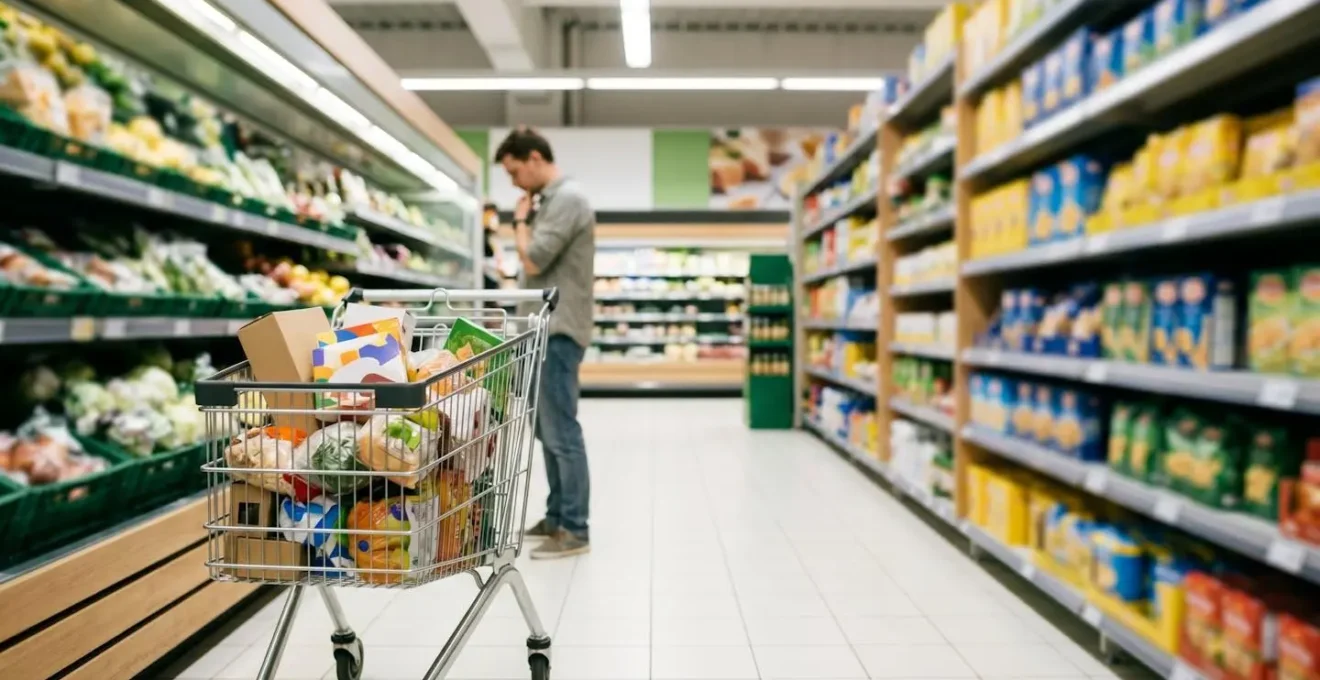
The secret to avoiding hidden ultra-processed foods (UPFs) isn’t just reading the label—it’s learning to think like the food technologists who created them.
- Most « healthy » packaged foods, from sandwiches to granola bars, are designed for shelf life and profit, not your well-being, using a specific playbook of industrial additives.
- Recognizing the *purpose* of an ingredient (e.g., emulsifier, dough conditioner) is more powerful than just spotting a long name you can’t pronounce.
Recommendation: Start by deconstructing one « healthy » item in your pantry using the principles in this guide to expose its true industrial nature.
You grab a pre-made sandwich or a « high-protein » yogurt pot for a quick, healthy lunch. You’ve checked the calories, maybe even glanced at the fat content. You’re trying to do the right thing. Yet, you might feel bloated, tired, or find that your anxiety is subtly spiking. This isn’t a failure of your willpower; it’s a failure of the product, cleverly disguised behind a mask of wellness. The food industry has become masterful at selling us ultra-processed items dressed up as health foods.
The common advice is to « read the ingredients » or « shop the perimeter of the store. » While well-intentioned, this is outdated. The most profitable—and often most harmful—ultra-processed foods (UPFs) have infiltrated every aisle, including the « healthy » ones. According to recent statistics, these products now make up over 70% of the U.S. food supply, and the industry has perfected the art of hiding them in plain sight.
But what if you could see through the deception? As a food technologist, I’m going to pull back the curtain. The key isn’t just to spot a long ingredient list; it’s to understand the industrial purpose behind each additive. It’s about learning to recognize the tools of my trade—the emulsifiers, the stabilizers, the flavor enhancers—that are used to create shelf-stable, hyper-palatable products at the expense of your gut health and well-being.
This guide will teach you to think like an insider. We will deconstruct common « healthy » foods to reveal their ultra-processed core, expose the marketing tactics used to create a misleading « health halo, » and provide you with actionable strategies to reclaim control of your health, your budget, and your shopping cart.
To help you navigate this complex world, we’ve broken down the key strategies and insights into a clear, actionable guide. This is your playbook for seeing through the marketing and understanding what’s truly in your food.
Table of Contents: A Food Technologist’s Guide to Decoding Your Food
- Why Is a Supermarket Sandwich Classified as Ultra-Processed?
- How to Spot ‘Health Washing’ on Packaging Labels
- Homemade vs Store-Bought Bread: Is the Effort Worth the Health Benefit?
- The Emulsifier Risk: What Do E-Numbers Actually Do to Your Gut Lining?
- How to Eat Whole Foods on a Budget When UPFs Are So Cheap
- How to Eat More Fermented Foods If You Hate Sauerkraut
- How to Prep a Week of Heart-Healthy Lunches in Under 60 Minutes
- How to Fix Your Gut Health to Reduce Anxiety Symptoms in 4 Weeks
Why Is a Supermarket Sandwich Classified as Ultra-Processed?
That grab-and-go sandwich seems like a fresh, simple choice: bread, meat, cheese, a bit of sauce. In reality, it’s a masterpiece of food engineering, a prime example of an assembled ultra-processed product. None of the components are what you would use in your own kitchen. The bread isn’t just flour and water; it’s a system of dough conditioners and enzymes designed to stay soft for days. The meat isn’t just sliced turkey; it’s a restructured product held together with phosphates and nitrites to preserve color and retain water weight.
The term « ultra-processed » refers to industrial formulations of ingredients that you wouldn’t typically use at home. These are not just added salt, sugar, or oil. We’re talking about substances extracted from foods (like protein isolates) or synthesized in labs (like flavor enhancers and emulsifiers). The goal is not nutrition; it’s to create a low-cost, highly profitable, long-lasting, and hyper-palatable product. To understand a UPF, you must deconstruct it and analyze the industrial purpose of each non-culinary ingredient.
This table breaks down a typical supermarket sandwich, revealing the hidden UPF markers within each « fresh » component. It exposes the functional role these additives play in creating a product that can withstand days under fluorescent lights, something homemade food could never do.
| Sandwich Component | Typical Ingredients | UPF Markers | Industrial Purpose |
|---|---|---|---|
| Bread | Flour, water, yeast, dough conditioners | Calcium peroxide, DATEM emulsifiers, enzymes | Texture consistency, extended shelf life |
| Processed Meat | Meat, sodium nitrite, phosphates | Nitrates/nitrites, modified starch, flavor enhancers | Preservation, color retention, water binding |
| Cheese | Milk, modified starch, emulsifying salts | Polyphosphates, cellulose powder | Meltability, prevent clumping |
| Sauce/Spread | Oil, stabilizers, thickeners | Xanthan gum, modified starch, maltodextrin | Texture stability, prevent separation |
How to Spot ‘Health Washing’ on Packaging Labels
The front of a food package is marketing real estate, not a source of reliable information. It’s designed to create a « health halo » around a product, using specific buzzwords to make you feel good about your purchase. Terms like « All Natural, » « Made with Whole Grains, » or « High Protein » are often nutritional decoys. They are legally true in the narrowest sense but are used to distract you from the long list of industrial ingredients on the back.
Your first act of rebellion is to ignore the front of the pack completely. The truth is always on the ingredient list and the nutrition panel on the back. This is where your new skill—thinking like a food technologist—comes into play. You are no longer just a shopper; you are an investigator, turning the package over to uncover what’s really inside. This simple physical act is the first step to reclaiming your power in the supermarket aisle.
As you can see, the real story is never on the front. Once you turn the package over, you need to know what to look for. « Natural » is an unregulated term. « Gluten-Free » does not mean healthy; it often means the product is packed with refined starches and gums to mimic the texture of wheat. The following list is your decoder for the most common misleading marketing terms.
- ‘Made with Whole Grains’ – May contain only a small percentage of whole grains; check if whole grain is the first ingredient listed.
- ‘No Added Sugar’ – Often filled with artificial sweeteners like sucralose or aspartame, which don’t appear as ‘sugar’ on labels.
- ‘Natural’ or ‘All Natural’ – Unregulated term that can include products with artificial dyes, chemical preservatives, and GMOs.
- ‘Reduced Fat’ or ‘Light’ – Often compensates with added sugar to improve taste.
- ‘Gluten-Free’ or ‘Vegan’ – Does not mean healthy; products often rely on refined flours, gums, and seed oils to compensate.
- ‘Organic’ – Organic junk food is still junk food. A cookie made with organic sugar and organic refined flour is still a highly processed item.
- ‘High Protein’ or ‘Fortified’ – May use protein isolates and added synthetic vitamins to create a health halo while hiding a long list of other additives.
Homemade vs Store-Bought Bread: Is the Effort Worth the Health Benefit?
Bread is a foundational food, but the chasm between a traditional loaf and an industrial one is immense. The primary difference is not just the ingredients, but time and fermentation. Industrial bread, produced using processes like the Chorleywood method, can go from flour to wrapped loaf in under three hours. This is achieved by using high-speed mixers and a cocktail of dough conditioners, enzymes, and emulsifiers. This process bypasses the slow, natural fermentation that makes bread nutritious and digestible.
The Fermentation Difference: Traditional vs Industrial Bread Production
Traditional sourdough bread undergoes slow fermentation (8-24 hours) where natural bacteria and wild yeasts break down complex gluten proteins and phytic acid, making nutrients more bioavailable and the bread easier to digest. This process also produces beneficial organic acids. In contrast, industrial bread production uses rapid fermentation (1-2 hours) accelerated by commercial yeast and dough conditioners. This fast process bypasses the natural breakdown of gluten and anti-nutrients, requiring additives to achieve the desired texture and shelf stability at the cost of nutritional transformation.
The health benefit is unequivocally worth the effort, but « effort » doesn’t have to mean baking your own sourdough every week. It’s about making conscious choices. The goal is to move up the hierarchy, away from the most processed options. Even choosing a supermarket loaf with fewer than five ingredients is a significant step. This table provides a realistic framework for buying bread, helping you make the best choice available to you in any situation.
| Tier | Type | Typical Ingredients Count | Key Characteristics | Time Investment | Health Impact |
|---|---|---|---|---|---|
| Tier 1 (Best) | Bakery/Homemade Sourdough | 3-5 | Flour, water, salt, time for fermentation | 8-24 hours (mostly waiting) | Natural fermentation breaks down gluten, unlocks nutrients, promotes gut health |
| Tier 2 (Good) | Supermarket <5 Ingredients | 4-5 | Whole grain flour, water, yeast, salt, maybe honey | Shopping only | Minimal processing, recognizable ingredients, decent fiber content |
| Tier 3 (Compromise) | Industrial with Selective Avoidance | 8-15 | Avoid: calcium peroxide, DATEM, azodicarbonamide, polysorbate 80 | Shopping + label reading | Still processed but avoiding worst emulsifiers and dough conditioners |
| Tier 4 (Avoid) | Highly Processed Industrial | 15+ | Multiple emulsifiers, preservatives, dough conditioners, added sugars | Convenient but costly to health | Rapid production bypasses fermentation benefits, gut microbiome disruption |
The Emulsifier Risk: What Do E-Numbers Actually Do to Your Gut Lining?
If there’s one class of additives that embodies the hidden dangers of UPFs, it’s emulsifiers. Their industrial purpose is to mix oil and water, creating a smooth, stable texture in products from ice cream to bread to salad dressing. But what do they do in your gut? The evidence is increasingly alarming. Your intestines are protected by a delicate mucus layer, a critical barrier that keeps gut bacteria away from your intestinal wall. Emulsifiers act like a detergent, thinning this protective layer.
This « leaky gut » effect can allow bacteria and other toxins to pass into your bloodstream, triggering low-grade chronic inflammation—a root cause of many modern diseases. A 2024 study from the French NutriNet-Santé cohort provided stark numbers, finding that intake of Carboxymethylcellulose (E466) was linked to a 3% increase in CVD risk, while Mono- and Diglycerides of fatty acids (E471) were associated with significantly higher risks for multiple types of cancer.
Not all E-numbers are villains; some are simply vitamins or natural extracts. The challenge is knowing which ones to avoid. The following checklist is your cheat sheet to identify the most common and problematic emulsifiers and thickeners that signal a product is ultra-processed and potentially harmful to your gut microbiome.
Your E-Number Watchlist: Key Additives to Avoid
- E466 (Carboxymethylcellulose/CMC): A major offender for thinning the gut mucus layer. Found in low-fat ice creams, sauces, and baked goods.
- E471 (Mono- and Diglycerides): Associated with increased cancer and heart disease risk. Ubiquitous in bread, cakes, and processed fats.
- E407 (Carrageenan): Linked to gut inflammation and higher cancer risk. Often found in dairy-free milks, processed meats, and yogurts.
- E433 (Polysorbate 80): Known to alter gut microbiome diversity and promote inflammation. Used in ice cream, pickles, and vitamin supplements.
- Watchlist Gums (Guar Gum, Xanthan Gum): While less harmful, they can cause digestive issues in sensitive individuals and are a clear marker of an ultra-processed formulation.
How to Eat Whole Foods on a Budget When UPFs Are So Cheap
The most common defence of ultra-processed food is its affordability and convenience. It’s true that a frozen pizza is cheaper per calorie than a salad with grilled salmon. However, this is a false economy. When you shift your perspective from price per calorie to price per nutrient, the picture changes dramatically. Dried lentils, oats, and eggs are nutritional powerhouses that cost a fraction of processed protein bars or sugary cereals.
The key to eating well on a budget is building a « Power Pantry » of versatile, low-cost staples. These are the building blocks of countless healthy meals. Having these on hand reduces the temptation to order takeout or reach for a packaged meal after a long day. It’s about strategic shopping and planning, not a bigger budget. A bag of lentils, a carton of eggs, and a head of garlic can be transformed into a dozen different meals, whereas a box of instant noodles can only ever be instant noodles.
Focusing your shopping on these core items immediately reduces your UPF consumption and your grocery bill. Cooking from scratch doesn’t have to be complicated. It can be as simple as boiling rice, roasting vegetables, and opening a can of beans. Here are the foundational items for an anti-UPF pantry:
- Dried lentils and beans: The undisputed champions of price-per-nutrient. Protein-rich, fiber-packed, and incredibly versatile.
- Oats (rolled or steel-cut): For breakfast, baking, or even savory porridge bases.
- Eggs: A complete protein that is quick to cook and affordable.
- Frozen vegetables: Nutritionally equivalent to fresh, with zero food waste. A must-have.
- Canned tomatoes (no additives): The base for countless sauces, soups, and stews.
- Brown rice or quinoa: A versatile whole-grain base for any meal.
- Onions, carrots, and garlic: The flavor foundation of real cooking.
- Whole-grain pasta: A quick and easy base for a nutrient-dense meal.
- Bananas and apples: Often the lowest-cost fruits, naturally pre-portioned and packed with fiber.
- Plain yogurt (with live cultures): A probiotic-rich base for breakfast, sauces, and smoothies.
How to Eat More Fermented Foods If You Hate Sauerkraut
If ultra-processed foods are the problem, then fermented foods are a powerful part of the solution. UPFs, particularly with their emulsifiers and lack of fiber, disrupt the gut microbiome. In contrast, fermented foods introduce beneficial bacteria (probiotics) that can help restore balance. However, many people are put off by the strong, sour flavors of traditional ferments like sauerkraut or kimchi. The secret is to start small and climb the « Flavor Ladder. »
Don’t force yourself to eat a pile of sauerkraut. That’s like learning to swim by jumping into the deep end. Instead, start with the mildest fermented foods and incorporate them into things you already enjoy. A spoonful of live-culture yogurt in a smoothie, a splash of kombucha as a soda replacement, or a dab of miso paste whisked into a soup are all easy entry points. As your palate adjusts, you can gradually explore more complex flavors. This approach makes incorporating probiotics a pleasure, not a chore.
The damage from UPFs is real; research published in Communications Biology demonstrates that common dietary emulsifiers can induce hyperglycemia and disrupt glucose homeostasis. Counteracting this requires a proactive approach, and the fermentation ladder is your guide.
The Fermentation Flavor Ladder: A Progressive Path for Beginners
- Level 1 (Mildest) – Plain live-culture yogurt: Add to smoothies, use as a sour cream substitute, mix with herbs for dips.
- Level 2 – Plain kefir: A tangy, drinkable yogurt. Blend into fruit smoothies or use as a buttermilk substitute in baking.
- Level 3 – Mild kombucha: Choose fruit-flavored varieties (ginger or berry) and use as a soda replacement.
- Level 4 – Miso paste (in cooking): Whisk a tablespoon into soups, stir into tomato sauce, or blend into salad dressings for a savory umami boost.
- Level 5 – Tempeh: A firm, nutty-tasting block of fermented soybeans. Marinate and grill it, crumble it into tacos, or add to stir-fries.
How to Prep a Week of Heart-Healthy Lunches in Under 60 Minutes
The number one reason people consume UPF-laden lunches is convenience. The antidote is not to find more time in your day, but to use your time more strategically. The « assembly-only » meal prep method is a game-changer. Instead of making five identical meals and suffering from flavor fatigue by Wednesday, you prep components. On a Sunday, spend one hour cooking a grain, roasting a tray of vegetables, preparing a protein, and whisking two simple dressings.
Store each component separately. Each morning, you spend less than three minutes assembling your lunch bowl, mixing and matching components for a different meal every day. This approach preserves the convenience of a quick lunch while giving you complete control over the ingredients, effectively eliminating preservatives, emulsifiers, and hidden sugars. It’s the ultimate strategy for breaking free from the expensive and unhealthy cycle of store-bought lunches.
The Assembly-Only Method: Real-World Application
A working parent implemented this method and reduced their UPF lunch purchases from five times per week to zero. By dedicating one 60-minute session on Sunday to prepare quinoa, roasted vegetables, grilled chicken, and two dressings, they could assemble varied lunch bowls in 3 minutes each morning. This prevented flavor fatigue while maintaining convenience. Their weekly grocery cost for lunches dropped from approximately $60 in purchased meals to $25 in whole food ingredients, saving $140 per month and eliminating countless industrial additives from their diet.
This mix-and-match formula provides endless variety from a small number of prepped components, making a healthy, UPF-free lunch faster than waiting in line at a cafe.
| Component | Option 1 | Option 2 | Option 3 | Option 4 | Prep Time |
|---|---|---|---|---|---|
| 1 BASE (Carb) | Quinoa (15 min cook) | Brown rice (35 min cook) | Sweet potato cubes (25 min roast) | Whole grain pasta (10 min cook) | 10-35 min |
| 1 PROTEIN | Grilled chicken breast (20 min) | Hard-boiled eggs (12 min) | Baked tofu cubes (25 min) | Canned wild salmon (0 min) | 0-25 min |
| VEGGIE 1 (Raw) | Cherry tomatoes (halved) | Cucumber slices | Shredded carrots | Mixed salad greens | 5-10 min |
| VEGGIE 2 (Cooked) | Roasted bell peppers | Steamed broccoli | Roasted zucchini | Sautéed mushrooms | 15-25 min |
| 1 DRESSING/SAUCE | Lemon-tahini (5 min blend) | Olive oil-balsamic (2 min whisk) | Greek yogurt-herb (3 min mix) | Avocado-lime (5 min mash) | 2-5 min |
| Assembly Strategy: Prep all components Sunday; store separately in containers; assemble each morning in 3 minutes. Total active prep time: 45-60 minutes for entire week. | 45-60 min TOTAL | ||||
Key Takeaways
- Think « industrial purpose, » not just ingredient names. If an ingredient’s role is shelf-life, texture, or cost-reduction, it’s a UPF red flag.
- The front of the pack is for marketing; the back is for science. Ignore the health halo and become an ingredient list investigator.
- Real food, like traditional bread, is defined by time and fermentation. Industrial food is defined by speed and additives.
How to Fix Your Gut Health to Reduce Anxiety Symptoms in 4 Weeks
The connection between your gut and your brain is not a wellness trend; it’s a hardwired biological reality known as the gut-brain axis. Your gut is home to trillions of bacteria that produce neurotransmitters, including serotonin and GABA, which are critical for regulating your mood. A diet high in UPFs systematically dismantles this intricate system. Emulsifiers damage the gut lining, a lack of fiber starves beneficial bacteria, and sugar spikes create hormonal chaos that directly impacts anxiety levels.
Gut-Brain Axis: How UPF-Heavy Diets Disrupt Mental Health
The gut-brain axis is a bidirectional communication system. UPFs disrupt this connection by thinning the gut mucus layer (increasing inflammation), starving beneficial gut bacteria that produce mood-regulating compounds, and causing blood sugar spikes that affect mood. Research shows high-UPF diets are associated with reduced gut microbiome diversity and lower levels of bacteria that produce GABA and serotonin, neurotransmitters critical for anxiety regulation. An umbrella review found that greater UPF consumption correlates with 32 health outcomes, with the strongest evidence linking diet to mental health via the gut.
The evidence is overwhelming. A 2024 review found that a diet high in ultra-processed foods increases the risk of anxiety by 48%. The good news is that this connection works both ways. By systematically removing UPFs and nourishing your gut with real, whole foods, you can directly and positively influence your mental health. This isn’t a quick fix, but a structured, four-week approach can yield significant results by calming inflammation and allowing your gut microbiome to heal and repopulate.
Your 4-Week Gut-Nourishing Plan for a Calmer Mind
- WEEK 1 – Remove & Replace: Swap sugary drinks and packaged snacks for water and whole fruits (berries, apples). Focus on stabilizing blood sugar to reduce anxiety spikes.
- WEEK 2 – Upgrade Breakfast: Ditch pre-packaged cereals and granola bars. Add overnight oats made with live-culture yogurt and ground flaxseed to support morning gut-brain signaling.
- WEEK 3 – Rebuild Lunch: Eliminate processed lunch meats and pre-made sandwiches. Introduce homemade lunch bowls with a wide variety of vegetables and a small amount of fermented food (kimchi, sauerkraut).
- WEEK 4 – Master Dinner: Avoid frozen dinners and takeout. Cook simple meals using whole ingredients, and be sure to include prebiotic foods like onions, garlic, and asparagus to feed your good gut bacteria.
- Daily Habits: Maintain regular meal times, stay hydrated, prioritize 7-9 hours of sleep, and incorporate a 10-minute stress-management practice each day.
Now that you have the food technologist’s toolkit, the power has shifted back to you. The next step is not to be perfect, but to be intentional. Start by auditing one « healthy » product in your pantry. Turn it over, read the list, and identify the industrial purpose. This is the first step to rewiring your brain and reclaiming your health, one informed choice at a time.